When comparing synthetic fabrics, nylon vs polyester is one of the most common and important questions—especially for buyers, designers, and product developers.
While both materials are widely used in textiles, they have different strengths, performance characteristics, and ideal applications. Understanding these differences will help you choose the right fabric for your specific needs.
⚠️ Note: If you're specifically focused on sportswear, you may want to read our detailed guide on activewear applications(Nylon vs Polyester: The Battle of Synthetic Fibers for Activewear). This article provides a broader, general comparison across industries including apparel, bags, outdoor gear, and industrial use.
Is Polyester Nylon?
is polyester nylon
A common question is: “Is polyester nylon?”
The answer is simple: No.
-
Nylon is a polyamide fiber
-
Polyester is a polyester polymer fiber
Although both are synthetic and share some similarities, they are chemically and structurally different, which leads to different performance characteristics.
Nylon vs Polyester: Quick Comparison
| Feature | Nylon Fabric | Polyester Fabric |
|---|---|---|
| Strength | Very strong | Strong |
| Elasticity | High | Moderate |
| Softness | Softer, smoother | Slightly rougher |
| Moisture Absorption | Low | Very low |
| Drying Speed | Fast | Very fast |
| Abrasion Resistance | Excellent | Good |
| UV Resistance | Moderate | Excellent |
| Cost | Higher | Lower |
What Is Nylon Fabric?
Nylon is a synthetic fiber known for its:
-
High strength
-
Excellent elasticity
-
Smooth texture
It is commonly used in:
-
Activewear
-
Swimwear
-
Technical fabrics
-
Industrial textiles
Nylon fabric is especially valued when flexibility and durability are required.
What Is Polyester Fabric?
Polyester is another widely used synthetic fiber known for:
-
Durability
-
Wrinkle resistance
-
Low cost
It is commonly used in:
-
Everyday clothing
-
Home textiles
-
Outdoor fabrics
-
Industrial materials
Polyester is often chosen for its affordability and resistance to environmental factors.
Key Differences Between Nylon and Polyester
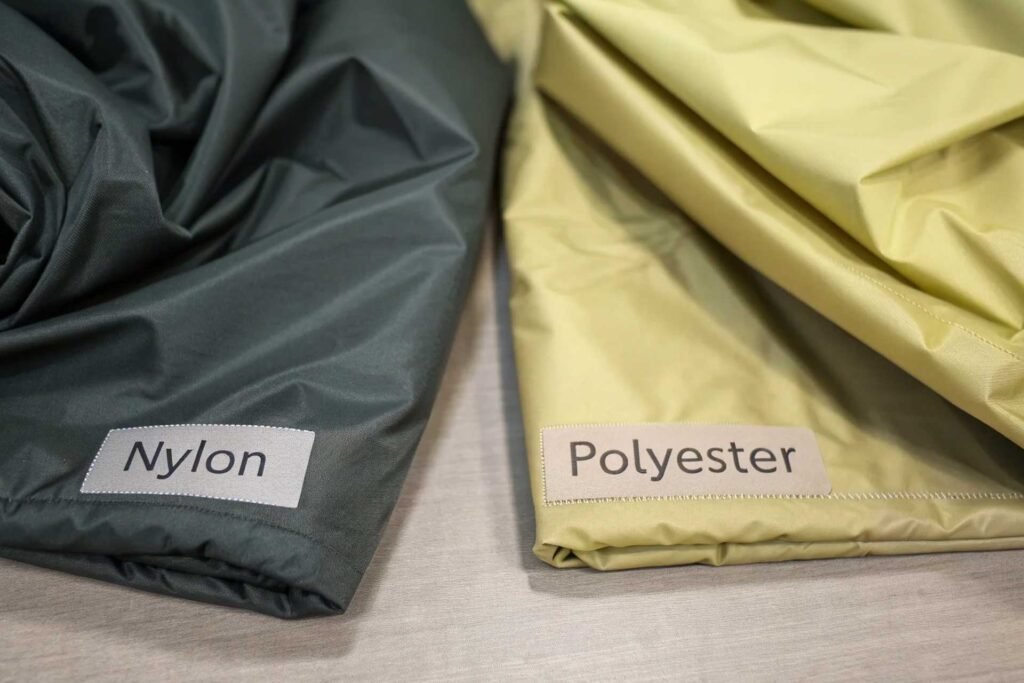
nylon and polyester
1. Strength and Durability
Both fabrics are strong, but nylon is generally:
-
More elastic
-
More resistant to abrasion
This makes nylon better for:
-
Stretch garments
-
High-movement applications
Polyester, however, offers:
-
Good strength
-
Better resistance to environmental exposure
2. Softness and Comfort
Nylon fabric typically feels:
-
Smoother
-
Softer
-
More skin-friendly
Polyester fabric can feel slightly:
-
Rougher
-
Less flexible
For garments worn close to the skin, nylon is often preferred.
3. Moisture and Drying
Both fabrics are hydrophobic, but polyester performs better in moisture management.
-
Polyester → absorbs less water, dries faster
-
Nylon → absorbs slightly more, but still dries quickly
This makes polyester ideal for:
-
Quick-dry clothing
-
Outdoor exposure
4. Elasticity and Stretch
Nylon has naturally better elasticity than polyester.
This makes it more suitable for:
-
Tight-fitting clothing
-
Activewear
-
Stretch fabrics
Polyester usually requires blending with spandex to achieve similar stretch.
5. UV and Weather Resistance
Polyester has superior resistance to:
-
UV rays
-
Sun exposure
-
Environmental degradation
This makes polyester better for:
-
Outdoor furniture
-
Outdoor fabrics
-
Long-term sun exposure
6. Cost and Availability
Polyester is generally:
-
More affordable
-
Easier to produce
Nylon tends to be:
-
More expensive
-
Considered a premium material
Nylon Fabric vs Polyester: Best Uses
nylon fabric vs polyester
When to Choose Nylon Fabric
Choose nylon when you need:
-
High elasticity
-
Soft texture
-
Strong abrasion resistance
Ideal Applications:
-
Activewear
-
Swimwear
-
Leggings
-
Technical fabrics
When to Choose Polyester Fabric
Choose polyester when you need:
-
Cost efficiency
-
UV resistance
-
Quick drying
Ideal Applications:
-
Outdoor fabrics
-
Everyday clothing
-
Bags and upholstery
-
Industrial textiles
Polyester vs Nylon for Clothing
When choosing between polyester vs nylon for clothing, consider the purpose of the garment.
-
Nylon → better for comfort, stretch, and performance
-
Polyester → better for durability, affordability, and outdoor use
Environmental Considerations
Both nylon and polyester are synthetic and petroleum-based, but:
-
Polyester is easier to recycle
-
Recycled polyester (rPET) is widely available
-
Recycled nylon is growing but less common
Sustainability is becoming an important factor in fabric selection.
Advantages and Disadvantages Summary
Nylon Fabric
Pros:
-
Strong and elastic
-
Soft and comfortable
-
Excellent abrasion resistance
Cons:
-
Higher cost
-
Lower UV resistance
Polyester Fabric
Pros:
-
Affordable
-
UV-resistant
-
Quick drying
Cons:
-
Less elastic
-
Slightly less comfortable
Which Fabric Is Better?
There is no single “better” fabric—it depends on your application.
-
For comfort, stretch, and premium feel → Nylon is better
-
For cost, durability, and outdoor resistance → Polyester is better
How to Choose for Your Business
If you are sourcing fabrics for products, consider:
1. End Use
-
Activewear → Nylon
-
Outdoor products → Polyester
2. Budget
-
Cost-sensitive projects → Polyester
-
Premium products → Nylon
3. Performance Requirements
-
Stretch & comfort → Nylon
-
UV & weather resistance → Polyester
4. Fabric Blends
In many cases, manufacturers combine both materials to achieve balanced performance.
Conclusion
The debate of nylon vs polyester comes down to understanding your needs. Nylon offers superior elasticity, softness, and abrasion resistance, while polyester provides better UV resistance, affordability, and quick-drying performance.
Both fabrics play essential roles in modern textiles, and the best choice depends on your specific application.
Looking for a Reliable Fabric Supplier?
Whether you need nylon fabric, polyester fabric, or blended textile solutions, we can support your business.
We specialize in exporting high-quality synthetic fabrics, offering competitive pricing, stable supply, and consistent quality control.
Contact us today to request samples or get expert recommendations tailored to your product needs.