Tulle is a lightweight, sheer, and sometimes slippery fabric, making it one of the trickiest materials to sew. Whether you’re creating skirts, veils, tutus, or decorative overlays, handling it properly ensures your project looks professional and prevents frustrating mistakes. Here’s a practical guide for working with slippery and delicate tulle mesh.
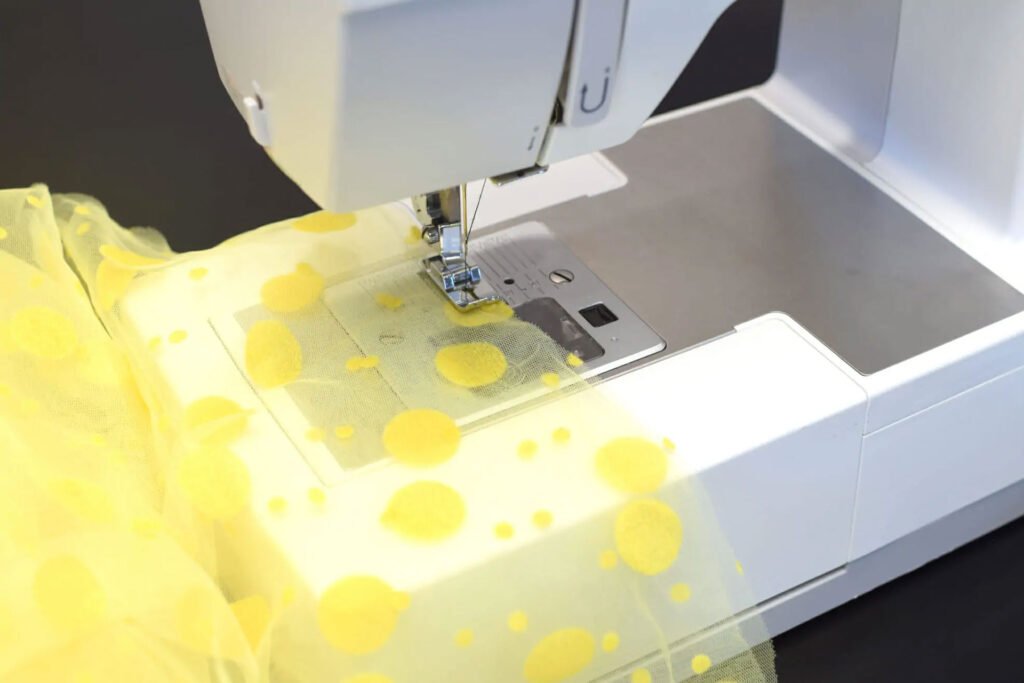
Sewing with Tulle
1. Choose the Right Needle and Thread
-
Needle: Use a sharp, fine needle like a size 70/10 or 75/11 microtex or universal needle to pierce the mesh cleanly without snagging.
-
Thread: Lightweight polyester or cotton thread works best. Avoid heavy threads that can distort the fabric.
💡 Tip: Always test on a scrap piece before sewing your project.
2. Cutting Tulle Without Snags
-
Use sharp fabric scissors or a rotary cutter for clean edges.
-
Layer the tulle lightly—don’t press too hard, as multiple layers can shift.
-
Pin carefully with fine, sharp pins or use fabric clips to avoid holes or tears.
3. Stabilize for Smooth Sewing
-
Tissue Paper or Water-Soluble Stabilizer: Place under the tulle when sewing to prevent puckering or stretching.
-
Layering: For skirts or gowns, consider sewing multiple layers together as one unit to keep alignment consistent.
4. Adjust Machine Settings
-
Shorter Stitch Length (2.0–2.5 mm): Helps prevent large holes and provides even seams.
-
Slow Speed: Take your time; tulle moves quickly under the presser foot.
-
Walking Foot: Optional but helpful for multiple layers or slippery tulle.
5. Seam Finishes
-
French Seams: Ideal for sheer tulle projects, as they hide raw edges and prevent fraying.
-
Rolled Hem: Perfect for delicate edges like veils or ruffles.
-
Zigzag Stitch: Useful for stretchy tulle or decorative seams.
6. Handling Multiple Layers
-
Always stack layers evenly and pin along edges every few inches.
-
Avoid stretching the tulle while sewing; keep a gentle hand on the fabric.
-
When gathering, use a long basting stitch and pull threads gently to maintain smoothness.
7. Pressing and Finishing
-
Use a low-temperature iron and a pressing cloth to avoid melting synthetic tulle.
-
Light steaming works better than direct ironing for smoothing out wrinkles.
8. Additional Tips for Success
-
Work in a clean space: Tulle attracts dust and lint easily.
-
Buy extra fabric: Mistakes happen, and having a little extra ensures you can redo layers.
-
Practice with scraps: Each type of tulle behaves slightly differently depending on stiffness and fiber (nylon, polyester, or silk).
Tulle may seem tricky at first, but with the right tools, gentle handling, and careful sewing techniques, you can achieve professional-quality results in costumes, skirts, veils, and décor projects.