When you receive a fabric spec sheet from a supplier, you aren't just looking at a list of numbers like 14.5oz, RHT, Sanforized. You are looking at a DNA profile. As an industry insider, I’ve seen many buyers choose a fabric based on weight alone, only to be disappointed when the final garment feels like sandpaper or shrinks two sizes in the wash.
To source the right material—or to buy your next 'grail' pair of jeans—you need to translate these technical denim fabric properties into real-world comfort and performance. Here is how to read a spec sheet like a pro.
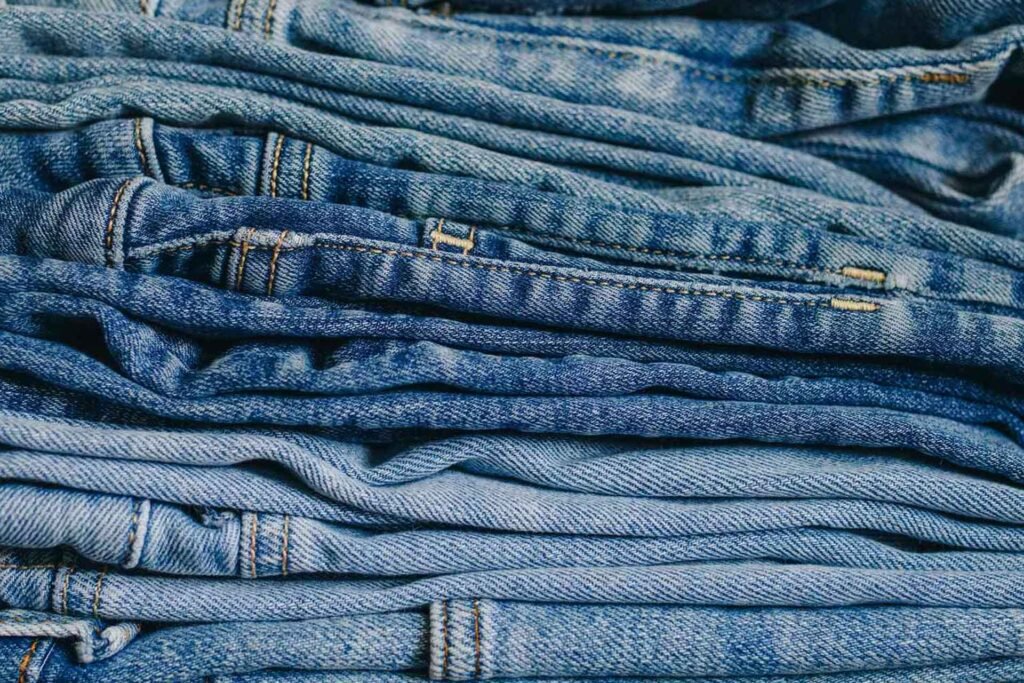
Denim Fabric Properties
1. The Weight (Ounces): It’s Not Just About Thickness
The most searched characteristic of denim is its weight, measured in ounces per square yard (oz). But weight doesn't just dictate warmth; it dictates your range of motion.
-
4oz – 8oz (Lightweight): This is 'shirt-weight' denim. It’s breathable and flowy.
-
The Trap: If you use this for trousers, they will lose their shape (bag out) almost immediately. It’s perfect for summer button-downs, not for rugged jeans.
-
-
11oz – 13oz (Mid-weight): The All-Season Champion. If you are building a collection and don't know where to start, 12oz is the 'sweet spot.' It’s sturdy enough to hold a silhouette but soft enough to wear comfortably on a long flight.
-
15oz – 21oz+ (Heavyweight): This is 'Armor.' These fabrics are for the hardcore enthusiasts.
-
The Insider Reality: Heavyweight denim creates the deepest, most beautiful fades, but be prepared for a 'break-in' period. For the first two weeks, it might feel like wearing a piece of plywood.
-
2. The Weave: Right Hand Twill (RHT) vs. Left Hand Twill (LHT)
Most people never look at the direction of the diagonal lines on their jeans, but this is the secret to how the fabric feels against your skin.
-
Right Hand Twill (RHT): The industry standard. The diagonal lines move from the bottom-left to the top-right. Because the yarn is twisted in a way that tightens during the weaving and washing process, RHT denim feels crisp, stiff, and rugged.
-
Left Hand Twill (LHT): The diagonal lines go from bottom-right to top-left. This weave creates a much softer hand-feel.
-
The Pro Tip: If you want premium jeans that feel 'broken-in' from day one, look for LHT on the spec sheet. It’s a favorite for luxury denim brands that prioritize comfort over 'workwear' stiffness.
-
3. The Shrinkage Factor: Sanforized vs. Unsanforized
This is the most dangerous part of a spec sheet. If you miss this detail, you might end up with a product that fits perfectly today and becomes unwearable tomorrow.
-
Sanforized: This means the fabric has undergone a mechanical shrinking process. The shrinkage rate is usually controlled at 1% to 3%.
-
The Value: What you see is what you get. You don't need to 'size up' to account for the first wash.
-
-
Unsanforized (Raw/Loomstate): This is the fabric in its 'natural' state. It can shrink by 5% to 10% after the first soak.
-
The Insider Warning: Unless you are a vintage purist who enjoys the 'shrink-to-fit' ritual, always confirm your fabric is Sanforized. Buying Unsanforized denim without knowing the math is a recipe for disaster.
-
4. Slub and Nep: The 'Flaws' That Cost More
On a spec sheet, you might see terms like 'Low Tension' or 'Slubby.' In most industries, irregular yarn is a defect. In denim, it’s a luxury.
-
Slubby Denim: This uses yarn with varying thicknesses. It creates a streaky, vertical texture that looks incredibly high-end once it starts to fade.
-
Neppy Denim: You’ll see little 'fuzz' or white dots on the surface. This adds a 'snowy' texture to the fabric.
-
The Buyer’s Logic: If the spec sheet says 'Uniform Surface,' you are getting a clean, modern look. If it mentions 'High Slub,' you are getting a rugged, artisanal fabric with high character.
Summary: Your Technical Checklist
Before you approve a sample or buy a high-end pair of jeans, ask these three questions based on the properties of denim fabric:
-
'Is the weight right for the climate?' (12oz for versatility, 16oz for durability).
-
'Does the weave direction match the vibe?' (RHT for tough, LHT for soft).
-
'Has it been Sanforized?' (To avoid the dreaded 3-inch shrinkage).
By translating these technical specs into a wearing experience, you stop guessing and start sourcing with confidence. In the world of denim, the numbers tell the story—you just have to know how to listen.