Not All Damask Feels the Same — And That’s Where Most People Get It Wrong
At a glance, all damask fabrics may look similar.
They share that same elegant, woven pattern.
But once you touch them — or try to use them — the differences become obvious.
Some feel light and breathable.
Some feel heavy and dramatic.
Others are built to last in high-traffic environments.
👉 The truth is:
The material behind the damask matters just as much as the weave itself.
In this guide, we’ll break down the main types of damask fabric — not just by what they are, but by when you should (and shouldn’t) use them.
Before We Start: Damask is a Weave, Not a Material
One of the biggest misconceptions is thinking damask is a type of fabric like cotton or silk.
It’s not.
Damask refers to how the fabric is woven, not what it’s made from.
👉 That’s why you’ll find:
- silk damask fabric
- cotton damask fabric
- velvet damask fabric
- even linen or polyester damask
Understanding this is key — because the base material determines how the fabric performs in real life.
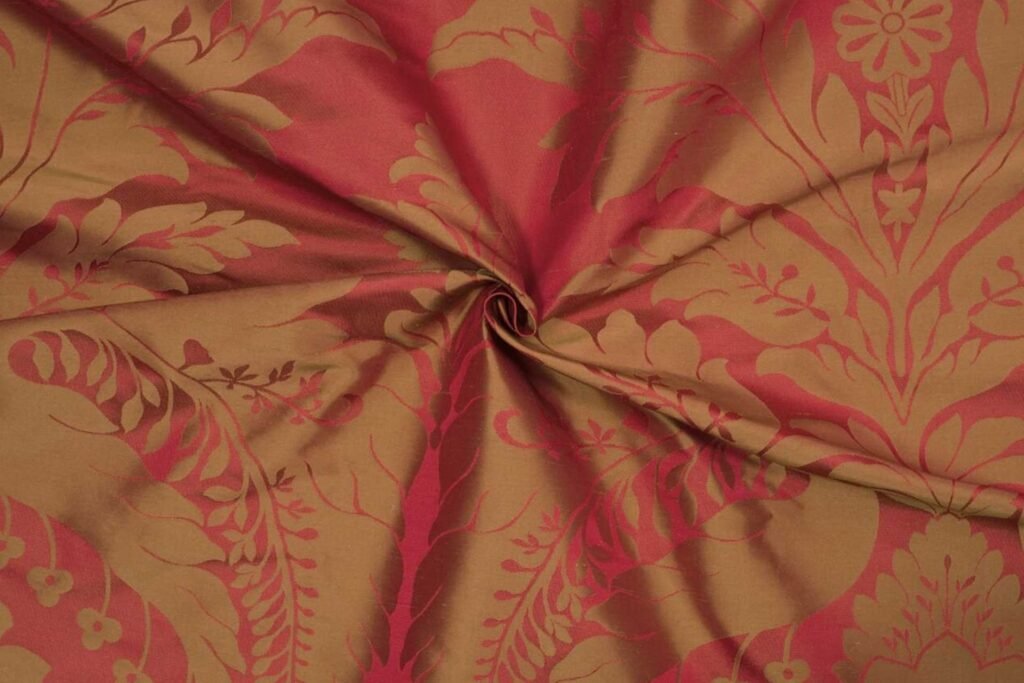
silk damask fabric
Silk Damask Fabric: When You Want Pure Luxury
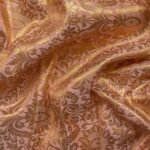
Silk damask is where the fabric’s reputation for elegance truly comes from.
It has a natural sheen that enhances the woven patterns, making them appear richer and more dimensional under light.
But silk damask isn’t just about looks — it’s about atmosphere.
It instantly makes a space feel more formal, more refined, and more intentional.
Best for:
- High-end interiors
- Decorative drapery
- Accent pieces
When to avoid it:
Silk damask is delicate and expensive.
It’s not ideal for everyday use or high-traffic furniture.
👉 Think of it as a statement fabric, not a practical one.
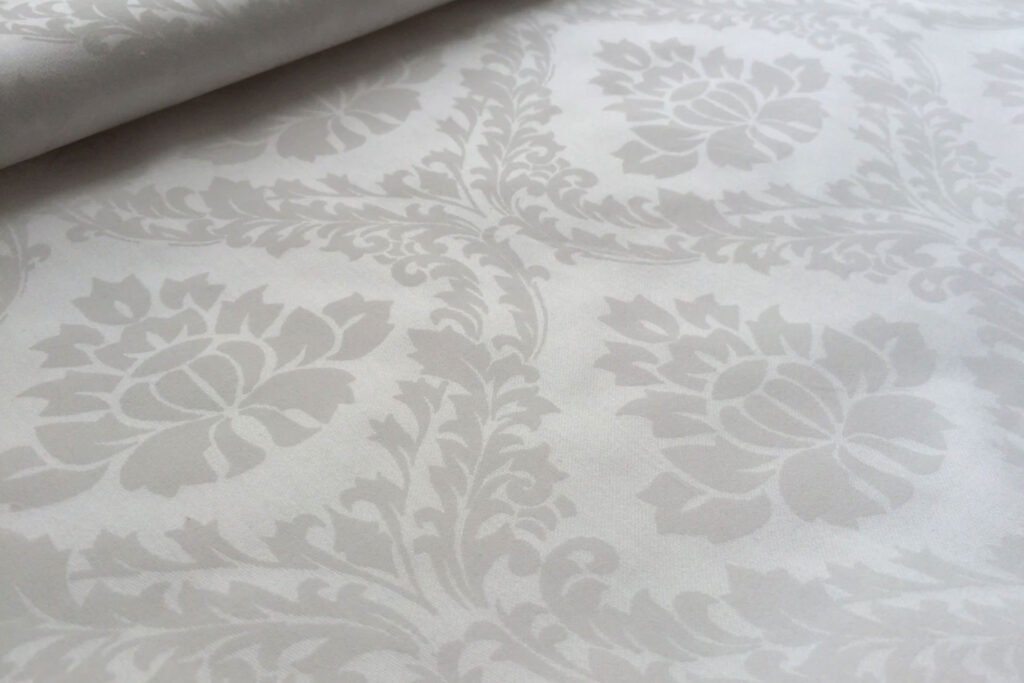
cotton damask fabric
Cotton Damask Fabric: The Balanced, Everyday Choice
If silk damask feels too formal, cotton damask offers a more relaxed version of the same elegance.
It keeps the woven pattern, but tones down the shine.
The result is a fabric that feels softer, more breathable, and easier to live with.
Best for:
- Tablecloths
- Light upholstery
- Casual curtains
Why people choose it:
It delivers the look of damask without the fragility of silk.
👉 In many homes, cotton damask is the most practical entry point into this fabric style.
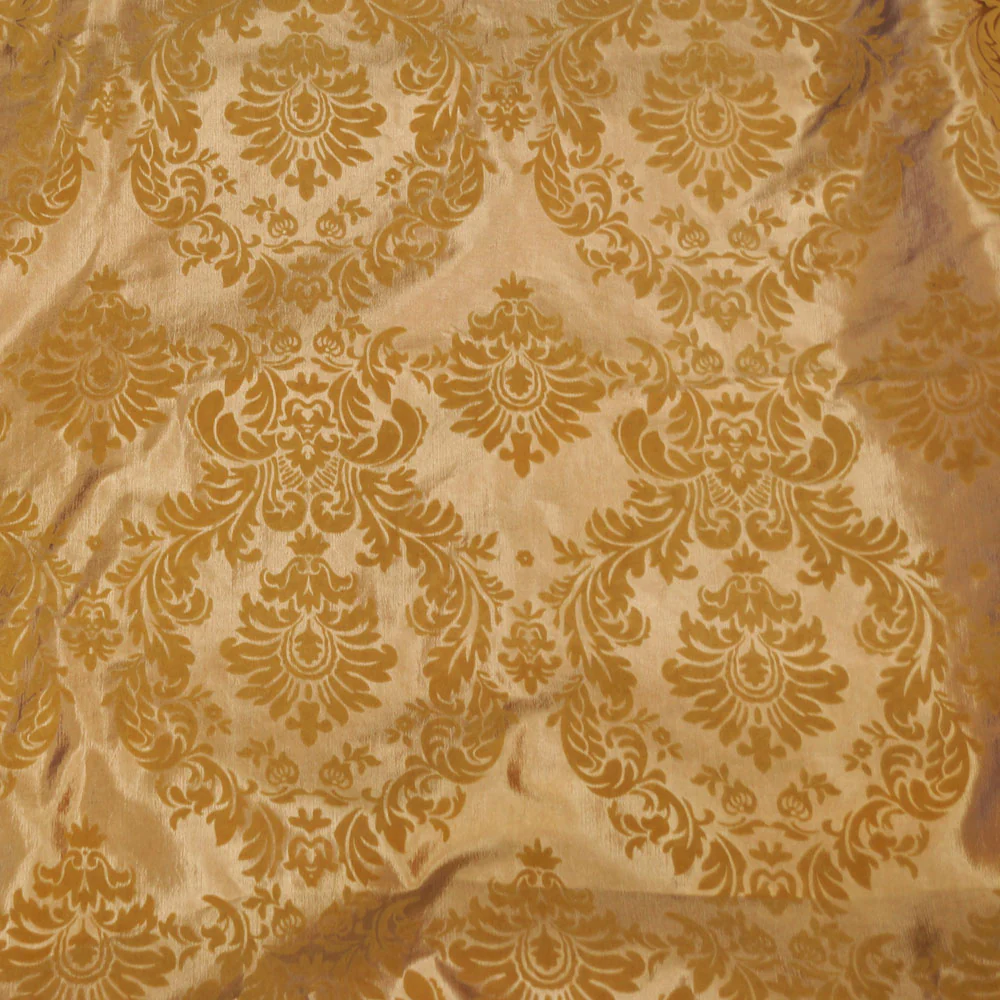
velvet damask fabric
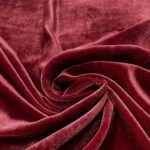
Velvet Damask Fabric: Depth, Drama, and Texture
Velvet damask takes things in a completely different direction.
Instead of subtle light reflection, it adds depth and contrast through texture.
The combination of velvet’s pile surface and damask patterns creates a bold, almost three-dimensional effect.
Best for:
- Statement furniture
- Accent walls or panels
- Luxury upholstery
What to consider:
Velvet damask attracts attention — sometimes a lot of it.
👉 If the rest of your space is already visually busy, this fabric can feel overwhelming.
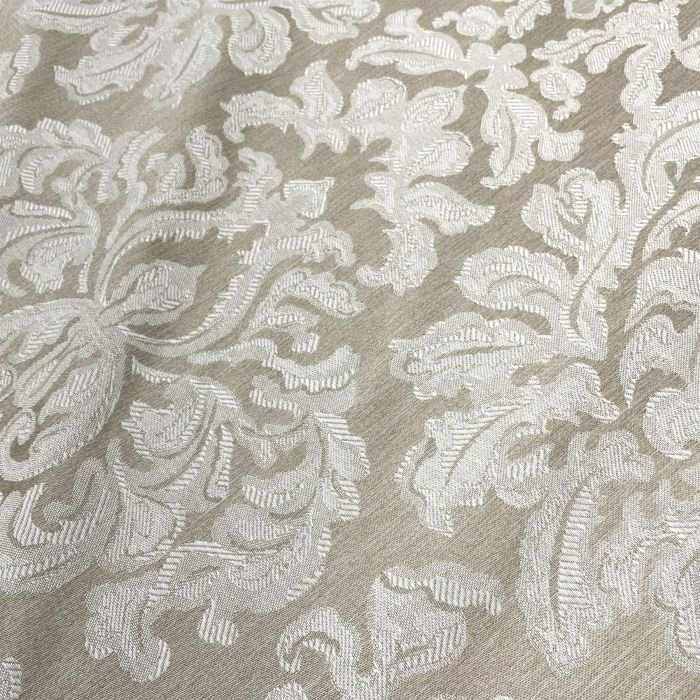
damask linen
Linen Damask Fabric: Understated and Natural
Linen damask is often overlooked — but it offers something unique.
It softens the traditional feel of damask and introduces a more natural, relaxed aesthetic.
The patterns are usually less reflective, giving the fabric a quieter, more organic appearance.
Best for:
- Modern interiors with a natural tone
- Light curtains
- Minimalist spaces with subtle detail
👉 Linen damask is a good choice if you want texture without formality.
Polyester Damask: The Practical Workhorse
While not always mentioned in traditional guides, polyester damask is widely used — especially in commercial settings.
It’s durable, affordable, and easy to maintain.
And with modern manufacturing, it can closely mimic the look of more expensive materials.
Best for:
- Hotels
- Restaurants
- High-traffic upholstery
- Budget-conscious projects
👉 If performance matters more than prestige, this is often the smartest choice.
How to Choose the Right Damask Fabric (Simple Decision Guide)
Instead of comparing endlessly, start with one question:
👉 Where will you use it?
For curtains
- Want elegance → silk or polyester
- Want practicality → cotton or polyester
For upholstery
- High traffic → polyester
- Decorative → velvet
For table use
- Everyday → cotton
- Formal → cotton or linen
For luxury interiors
- Silk or velvet
A Quick Reality Check Before You Buy
Damask fabrics don’t behave like flat materials.
They interact with light — which means:
👉 The same fabric can look completely different depending on:
- lighting
- angle
- surrounding colors
That’s why experienced buyers rarely choose damask based on photos alone.
👉 Always request samples when possible.
Final Thoughts
Damask isn’t just about pattern — it’s about how that pattern comes to life through material.
Two damask fabrics can look similar in pictures but perform completely differently in real spaces.
Understanding the differences between silk, cotton, velvet, and other types isn’t just helpful — it’s essential if you want the right result.
Looking for the Right Damask Fabric?
Whether you're sourcing for upholstery, curtains, or commercial projects, choosing the right material makes all the difference.
👉 Contact us today for fabric samples, expert recommendations, and competitive pricing tailored to your needs.