You’re browsing online, and you see two pairs of pants. One is labeled '100% Cotton Denim,' and the other just says 'Blue Jeans.' One costs $20, the other $120. They look identical in photos, so why the price gap?
The truth is, most people use the words Denim and Jeans to mean the same thing, but understanding the difference is the secret to finding clothes that actually last.
If you’ve ever bought a pair of jeans that lost its shape after two washes or felt like sandpaper on your skin, this guide is for you.
1. The 3-Second Rule: Denim vs Jeans
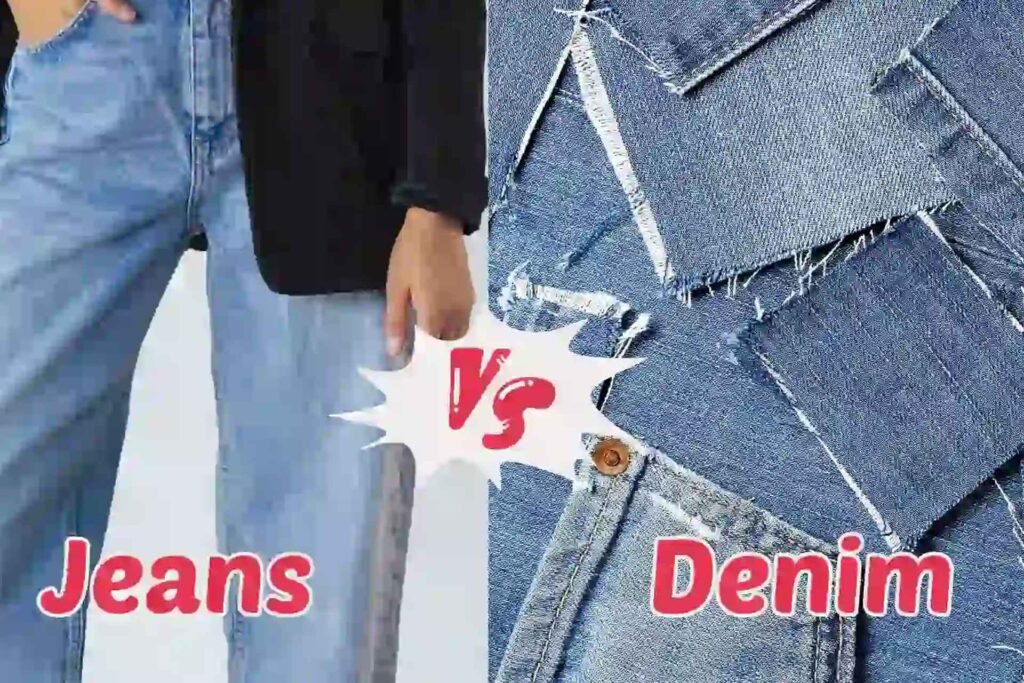
Here is the simplest way to keep it straight: Denim is the ingredient; Jeans are the dish.
-
Denim is the heavy-duty, indigo-dyed fabric.
-
Jeans are the specific style of pants made from that fabric.
Why does this matter? Because you can have a denim jacket, a denim bag, or even denim shoes. But you can't have 'jeans' made of silk or chiffon. If the fabric isn't denim, they aren't true jeans—they’re just blue trousers.
2. The 'Insider Test': How to Spot High-Quality Denim in Seconds
Price tags lie, but the fabric doesn't. Whether you are shopping for yourself or sourcing for a brand, flip the cuff of the pants and look for these two things:
A. The 'White Back' (The Weft)
Real denim is woven with blue threads going one way and white threads going the other. This is why the inside of your jeans should look much lighter than the outside. * The Value: If the fabric is just as blue on the inside as the outside, it’s not traditional denim. It’s likely a cheap, piece-dyed cotton that will fade unevenly and feel 'flimsy.'
B. The 'Diagonal Rib' (The Twill)
Run your fingernail over the surface. Do you feel diagonal ridges? That’s the Twill Weave.
-
The Value: This diagonal structure is what makes denim legendary. It’s a natural 'armor' that prevents small snags from turning into giant rips. No diagonal line? No durability.
3. Is '100% Cotton' Always Better?
This is the biggest myth in the industry.
-
The 'Purist' View: 100% cotton denim is the gold standard for vintage lovers. It’s tough and develops beautiful fades. But, it has zero stretch. If you buy these too tight, they will never be comfortable.
-
The 'Modern' Reality: Most premium jeans today contain 1% to 3% Elastane (Spandex).
-
The Pro Tip: If you want that classic look but still need to be able to sit down comfortably, look for a 98% Cotton / 2% Elastane blend. It keeps the 'Denim' soul but adds 'Jeans' comfort.
denim vs jeans
4. Why are they always Blue? (And why it’s good for you)
You’ll notice most searches ask: Does denim have to be blue? Technically, no. But the 'Blue' in denim is functional. Indigo dye doesn't fully penetrate the yarn; it sits on the surface.
-
The Result: As you move, the blue rubs off in high-stress areas (like your knees and seat), revealing the white core of the yarn.
-
The Value: This is called 'Fading.' It means your jeans become a unique map of your life. A 'pre-faded' cheap pair of pants will never look as good as a pair of real denim jeans that you've 'broken in' yourself.
Summary: Your Buying Checklist
Next time you’re at a store or looking at a spec sheet, use this:
-
Flip the cuff: Is the back white/off-white? (If yes, it's real denim).
-
Check the grain: Is there a diagonal line? (If yes, it's durable).
-
Read the label: 100% cotton for durability; 2% stretch for comfort.
By understanding that Denim is the material science and Jeans are the fashion, you stop buying 'disposable' clothes and start investing in pieces that get better with age.