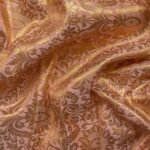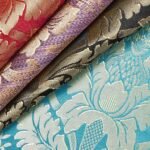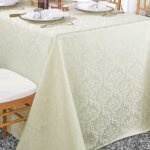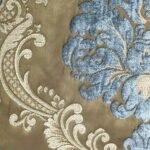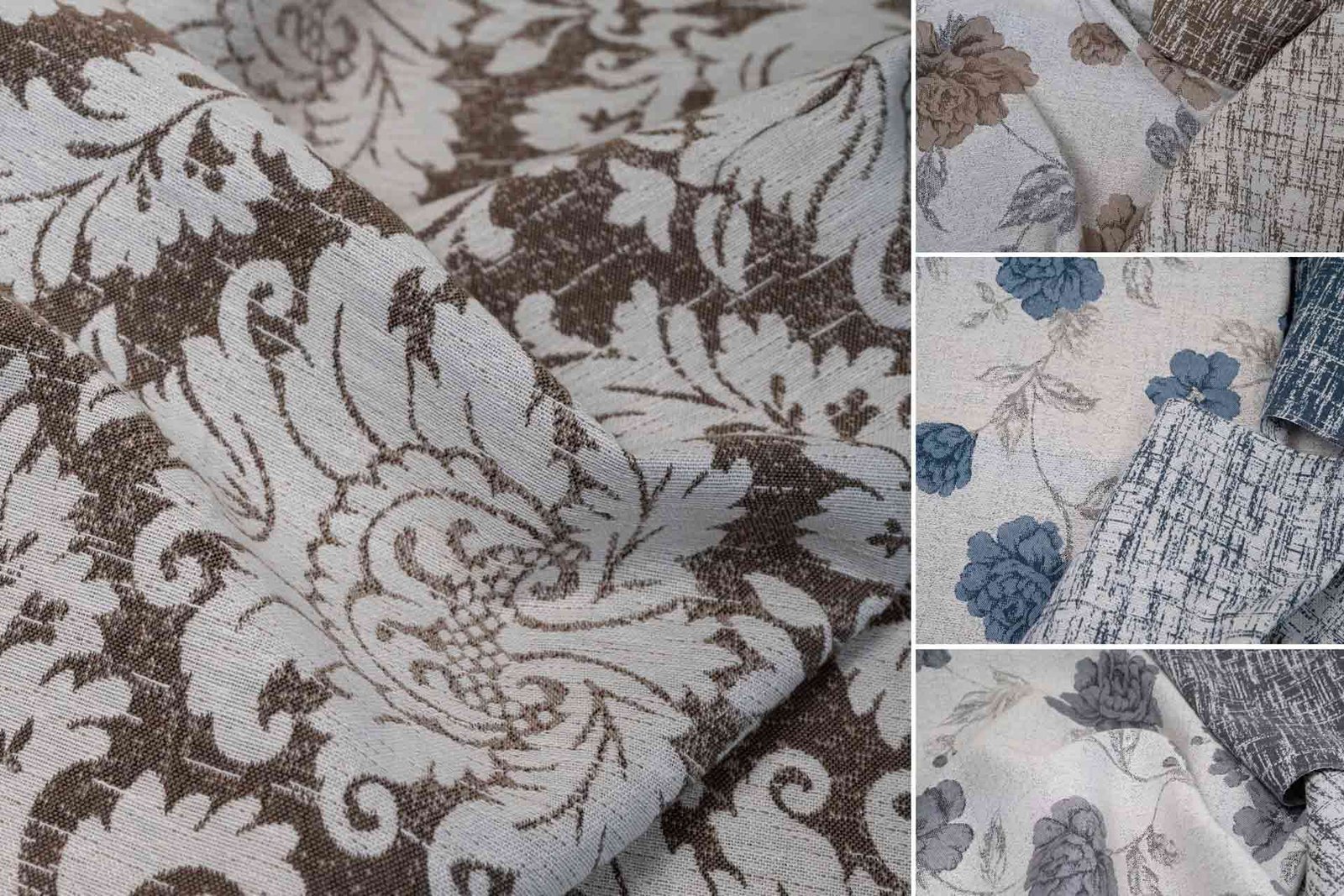
You've seen it happen. Two pieces of fabric, nearly identical floral patterns, both labeled damask. One is $15 a yard at a home goods store. The other is $250 a yard at a fabric boutique three blocks away. The salesperson at the expensive place says something vague about 'quality' and 'craftsmanship.' The cheap one's tag just says 100% polyester.
So what are you actually paying for?
The honest answer has nothing to do with brand markup or boutique rent. It comes down to four compounding factors: the loom that made it, the yarn that went into it, how tightly those yarns were packed together, and what happened to the fabric after it came off the machine. Each factor builds on the last. Shortcut any one of them and the whole thing drops a tier.
Here's how it works.
It Starts With the Loom
Damask is woven on a Jacquard loom — a machine that controls individual warp threads independently to build the pattern into the fabric itself. The key spec is needle count: how many threads the loom can control at once.
A basic 300-needle Jacquard can produce damask, but the resolution is coarse. Curves look stepped. Fine lines blur. A rose with layered petals ends up looking more like a blob than a flower. Geometric patterns hold up better at low resolution, but anything organic loses definition.
A 1,200-needle Jacquard produces four times the detail. Edges are clean. Curves are actually curved. The transition between the shiny motif and the matte background — the defining visual feature of damask — is sharp instead of jagged.
Beyond needle count, speed matters too. High-end mills, particularly in Belgium and Ireland for linen damask, run their looms slower than mass-market production. Slower weaving produces more even thread tension, which means a flatter, more consistent fabric with crisper pattern definition. Running a loom slowly costs money. Most budget production runs as fast as mechanically possible.
This is where the price gap starts — before a single thread has even been chosen.
Then Comes the Yarn
'Cotton damask' covers an enormous range because cotton itself isn't a single thing. Neither is silk, linen, or polyester. The fiber content on the label tells you the category. It doesn't tell you the quality within that category.
Staple length is the most important variable for natural fibers. Long-staple cotton — Egyptian, Pima, Supima — produces smoother, stronger yarn with less surface fuzz. In damask, where the satin-weave floats are supposed to catch light cleanly, fuzz is the enemy. It creates a slightly hazy surface that dulls the contrast between motif and background. Short-staple cotton is cheaper to source and produces a noticeably less refined result.
Yarn fineness determines how many threads can fit in a given space. Finer yarn allows denser weaving, which allows more pattern detail and a smoother hand feel. This is why thread count in bedding is loosely correlated with quality — but only loosely, because thread count without yarn quality is meaningless.
Mercerization is a chemical treatment applied to cotton that swells the fibers and makes them more cylindrical. The result is a subtle but real increase in sheen. Most quality cotton damask is mercerized. Budget versions often aren't. You won't see this on the label, but you'll see it in how the fabric catches light — mercerized cotton has a quiet luminosity that untreated cotton lacks.
For silk specifically: mulberry silk, from silkworms fed on mulberry leaves, produces long, uniform filaments and the finest yarn. Tussah silk, from wild silkworms, is slightly nubby and less lustrous. Both can be labeled 'silk damask.' The visual difference is significant once you've seen them side by side.
How Tightly It's All Packed Together
Yarn quality and loom capability determine what's possible. Weave density determines whether that potential is actually realized.
Density is measured in threads per inch — both warp (vertical) and weft (horizontal). Higher density means more threads in the same space, a heavier hand, and better pattern definition. It also requires finer yarn, which is why high-density and high-thread-count fabrics necessarily go together.
For damask specifically, density affects the float length of the satin weave. In a satin weave, threads skip over several others before interlacing — these 'floats' are what create the sheen. Longer floats mean more reflective surface area and more pronounced shine. But long floats in a loose weave snag easily. High-density weave allows longer floats with less risk, which is how fine damask achieves its distinctive luster while remaining durable.
This is also the real difference between single and double damask — a distinction worth understanding because it affects price significantly.
Single damask uses a 5-shaft satin weave: each thread floats over four others. Double damask uses an 8-shaft weave: each thread floats over seven. The longer floats in double damask produce more pronounced sheen contrast and a silkier hand. They also require finer yarn, more precise tension control, and slower weaving. A set of double damask linen napkins costs two to three times more than single damask equivalents — and the difference is visible and tactile, not just theoretical. For genuinely formal table settings, double damask linen is the traditional standard for a reason.
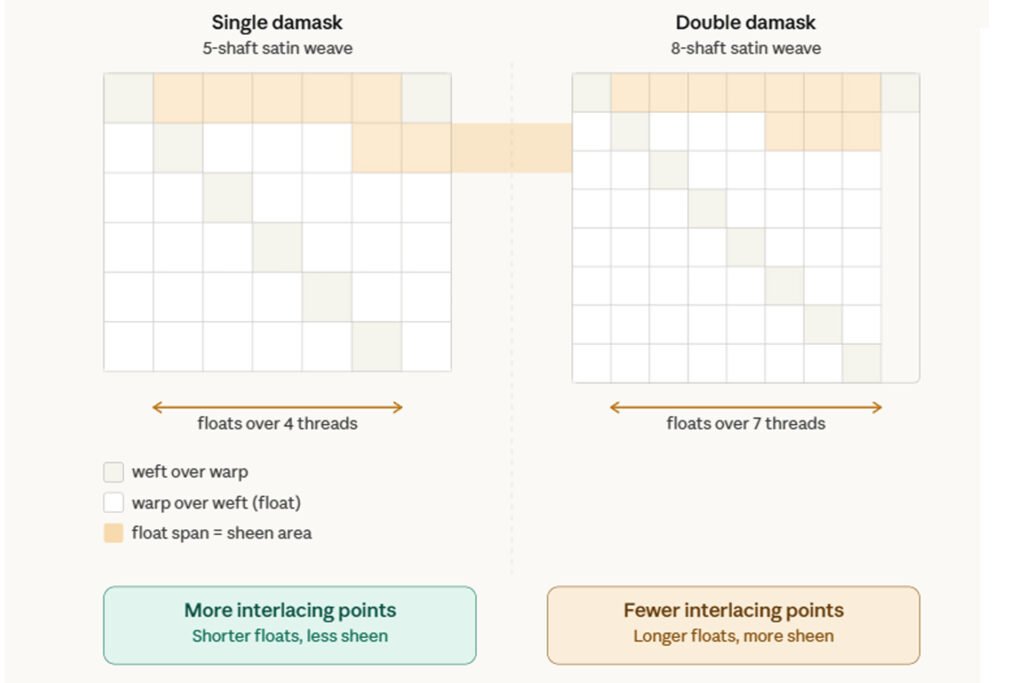
Single vs Double Damask
What Happens After the Loom
A fabric straight off the loom is stiff, slightly dull, and not ready to sell. The finishing process — everything that happens between the loom and the store shelf — can add real value or cut corners in ways you won't notice until months later.
Scouring removes natural oils and impurities from the fiber. Thorough scouring improves how evenly the fabric dyes and how it feels against skin. Rushed scouring leaves residues that affect hand feel and dye uptake.
Calendering passes the fabric between heavy heated rollers to flatten the weave and increase surface sheen. Good calendering on damask sharpens the visual contrast between motif and background. It's a legitimate finishing step — but it can also be used to make mediocre fabric look better in the store than it will after the first wash, when the effect partly reverses.
Dyeing quality matters most for colored damask. Reactive dyes bond chemically with natural fibers and stay vibrant through repeated washing. Cheaper direct dyes sit on the fiber surface and bleed more readily. For traditional white or ivory damask, this is less critical. For two-tone or colored versions, dye quality determines whether the contrast stays sharp over years of use.
How to Actually Tell the Difference in a Store
You don't need technical knowledge to assess damask quality. You need to know where to look.
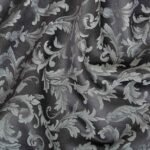
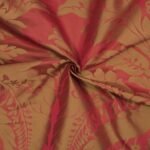
Hold it up to oblique light. Angle the fabric at about 45 degrees to a light source. Good damask shows a clear, sharp contrast between the sheen of the satin motif and the relative matte of the background. The pattern looks almost three-dimensional. Cheap damask shows a flat, uniform surface — the pattern is there, but the contrast is weak.
Look at the edge of a design element. Find a petal or the curve of a leaf and look closely at its edge. High-resolution Jacquard produces a smooth, clean line. Low-resolution weaving produces a stepped, slightly pixelated edge. A phone camera zoomed in makes this easier to see.
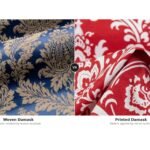
Flip it over. Genuine woven damask is reversible — the pattern appears on both sides, with motif and background swapped. If the back looks completely different, has loose threads, or shows no pattern at all, you're looking at either brocade or a printed imitation, not true damask.
Lightly scratch the surface. Run a fingernail across the shiny float area. On a dense, well-twisted fabric, nothing happens. On cheap damask with loose weave or low-twist yarn, the threads shift slightly under pressure. This is called thread slippage and it predicts how the fabric will distort and lose definition over time.
Rub a damp white cloth against it. For any colored damask, this is the fastest colorfastness test. Significant color transfer means low dye quality — relevant for anything you'll wash regularly.
So When Is the $250 Version Worth It?
Not always. That's the honest answer.
For heirloom table linens, fine upholstery, or bedroom textiles you'll use daily for the next decade, the investment in quality damask pays off. A set of double damask linen napkins used weekly for twenty years costs less per use than three cheaper sets that pill and lose definition. The economics favor patience.
For guest room curtains, occasional-use tablecloths, or decorative cushions in low-traffic areas, mid-range cotton damask is entirely sensible. You're not sacrificing much that matters in practice.
For event tablecloths, children's rooms, rental linens, or anywhere stain resistance and easy washing matter more than refinement, budget polyester damask is the right call. No shame in that — it's using the right tool for the job.
The most useful principle is simple: buy the best quality for the things you use most. The rest can wait.
The Real Takeaway
The $15 and $250 damasks share a name, a basic weave structure, and often a nearly identical pattern. Everything else — loom resolution, yarn staple length, weave density, finishing standard — is different. The price gap isn't arbitrary, and it isn't purely boutique markup.
Once you understand what you're actually evaluating, you stop looking at the label and start looking at the fabric. That shift makes you a much harder person to overcharge — and occasionally helps you find genuinely good damask at prices that don't require much deliberation at all.