
As sustainable fashion becomes more than just a trend, many shoppers are asking: What is lyocell fabric? Is it natural? Is it better than cotton? And how does it compare to Tencel?
This guide explains what lyocell is made of, how it’s produced, and why it’s considered one of the most sustainable modern textiles available today.
What Is Lyocell Fabric?
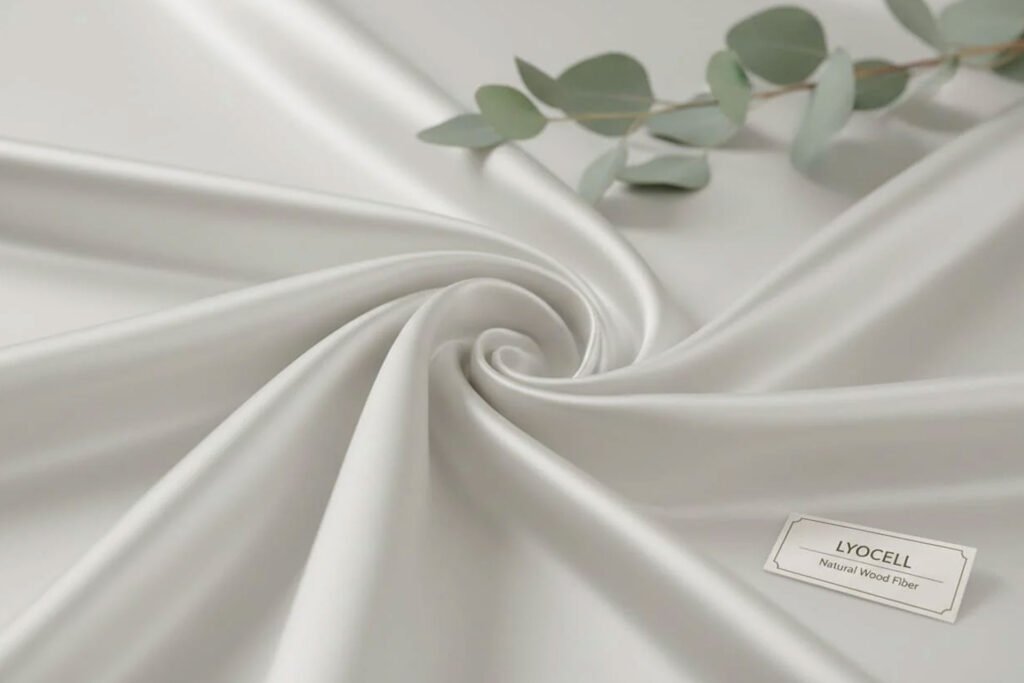
Lyocell is a regenerated cellulose fiber made primarily from wood pulp. The raw material usually comes from fast-growing trees such as eucalyptus, beech, or spruce.
Unlike fully synthetic fibers (like polyester), lyocell is derived from plant material. However, it is not simply processed mechanically like cotton or linen. Instead, it undergoes a controlled chemical process that transforms wood pulp into smooth, wearable fiber.
In short:
-
Source: Natural wood pulp
-
Category: Regenerated cellulose fiber
-
Type: Semi-synthetic (plant-based but processed)
Lyocell vs. Tencel: Are They the Same?
A common source of confusion is the difference between lyocell vs. Tencel.
-
Lyocell is the generic fiber name.
-
TENCEL™ is a trademarked brand name owned by the Austrian company Lenzing.
Think of it like this:
-
Lyocell = the fiber type
-
Tencel = a premium branded version of lyocell
Not all lyocell is branded as Tencel, but all Tencel fibers are lyocell.
What Is Lyocell Made Of?
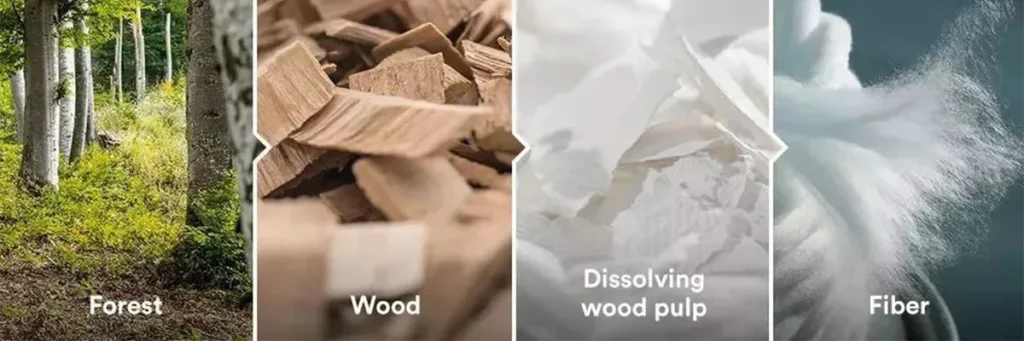
What Is Lyocell Made Of
If you're wondering what is lyocell made of, the answer is straightforward: purified wood pulp cellulose.
Here’s a simplified breakdown of the process:
-
Wood is harvested from responsibly managed forests.
-
The wood is chipped and processed into pulp.
-
The pulp is dissolved using a specialized solvent.
-
The solution is pushed through fine spinnerets to form fibers.
-
Fibers are washed, dried, and spun into yarn.
The result is a smooth, strong, and highly uniform fiber with excellent performance properties.
The Closed-Loop Production Process (Why It’s Considered Sustainable)
One of the key reasons people ask, Is lyocell sustainable? is because of its production method.
Lyocell is made using a closed-loop process, which significantly reduces environmental impact compared to traditional viscose or rayon manufacturing.
What does “closed-loop” mean?
-
The solvent used to dissolve the wood pulp is captured and reused.
-
Over 99% of the solvent is recovered during production.
-
Minimal waste is released into the environment.
This system dramatically reduces water consumption and chemical discharge compared to older regenerated fiber methods.
In addition, when sourced from certified forests, the raw material is renewable and responsibly managed.
Lyocell Characteristics: What Makes It Unique?
Understanding lyocell characteristics helps explain why it’s used in everything from bedding to athletic wear.
1. Smooth and Soft
Lyocell fibers are extremely smooth and round at the microscopic level. This gives the fabric:
-
A silky hand feel
-
Reduced skin friction
-
Comfort for sensitive skin
2. Breathable and Moisture-Wicking
Lyocell absorbs moisture efficiently and releases it quickly. This helps:
-
Regulate body temperature
-
Reduce dampness
-
Improve comfort in humid conditions
3. Strong Yet Lightweight
Despite its soft feel, lyocell has excellent tensile strength. It:
-
Holds its shape well
-
Resists pilling
-
Maintains durability through repeated washing (when cared for properly)
4. Biodegradable
Because it is cellulose-based, lyocell is biodegradable under appropriate environmental conditions.
Is Lyocell Natural?
This is one of the most frequently asked questions.
Is lyocell natural?
The accurate answer: It is semi-synthetic.
-
The raw material (wood pulp) is natural.
-
The fiber itself is chemically processed into its final form.
So while lyocell comes from nature, it is not a “natural fiber” in the same way cotton or wool is. Instead, it sits between natural and synthetic categories — often referred to as a regenerated fiber.
Is Lyocell Sustainable?
When produced responsibly, lyocell is considered one of the more sustainable textile options available today because:
-
It uses renewable wood sources.
-
It relies on a closed-loop solvent system.
-
It is biodegradable.
-
It generally requires less water than conventional cotton farming.
However, sustainability ultimately depends on:
-
Forest sourcing practices
-
Manufacturing transparency
-
Brand accountability
Always look for certifications or supply chain transparency when evaluating eco-friendly claims.
Final Thoughts: Should You Choose Lyocell?
Lyocell represents a modern evolution in textiles — combining plant-based origins with advanced manufacturing technology.
It offers:
-
Silk-like softness
-
Breathability and moisture control
-
Strength and durability
-
Lower environmental impact compared to many alternatives
If you’re looking for a fabric that balances comfort, performance, and responsible production, lyocell is a strong contender.
Understanding what lyocell fabric is — and how it differs from other materials — allows you to make informed, confident choices for your wardrobe and home.