
For many people of Scottish descent, wearing a clan tartan is more than a fashion choice—it’s a statement of heritage and pride. Certain patterns, such as Black Watch, Royal Stewart, Campbell, and MacDonald, are searched and worn more than any others.
Below, we explore ten of the most recognized Scottish clan tartans, their historical background, and the symbolism behind their clan crests.
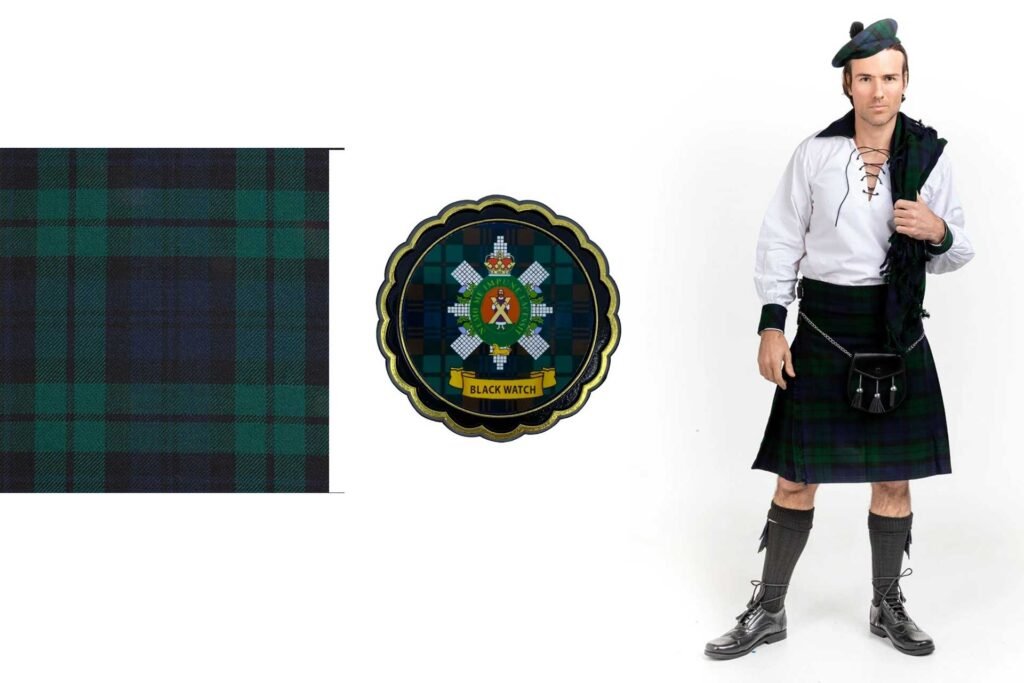
1. Black Watch (The Government Tartan)
History:
The Black Watch tartan originated in the early 18th century and was worn by the Royal Highland Regiment, formed to keep peace in the Highlands. Unlike clan-specific patterns, this was initially a military tartan.
Why It’s Popular:
Its dark navy and green tones make it one of the most versatile and widely worn tartans worldwide.
Crest Symbolism:
Often associated with the stag’s head badge and the motto “Nemo me impune lacessit” (“No one provokes me with impunity”).
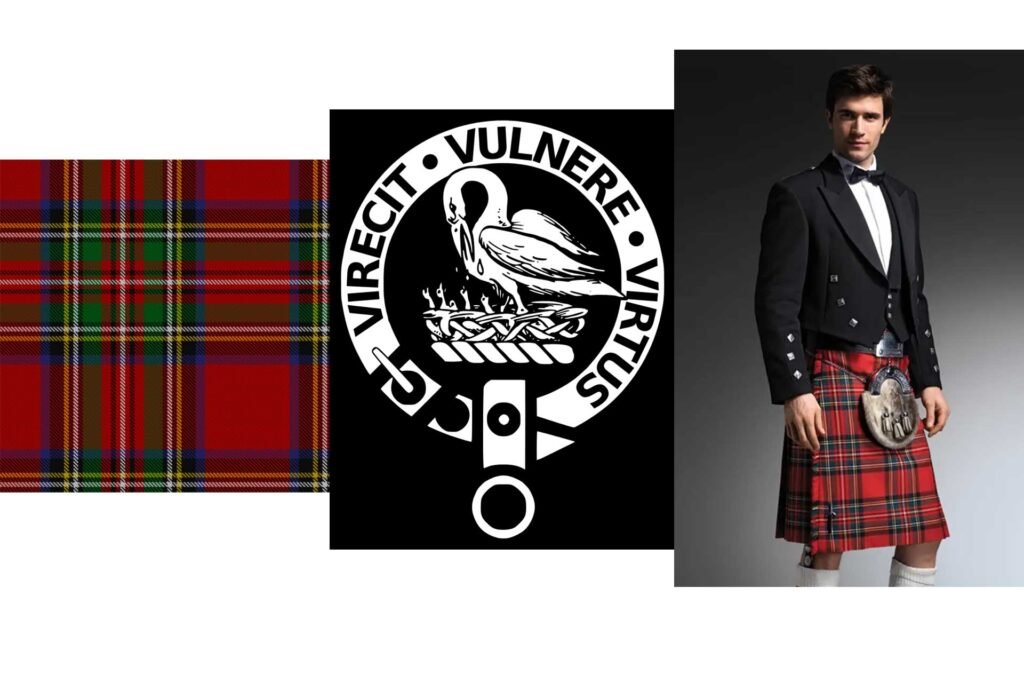
2. Royal Stewart
History:
Royal Stewart is the personal tartan of the British monarch and linked to the House of Stewart, which ruled Scotland and later England.
Why It’s Popular:
Its bold red background makes it one of the most recognizable tartans globally.
Crest Symbolism:
The Stewart crest features a pelican feeding its young, symbolizing sacrifice and protection.
3. Campbell

History:
Clan Campbell was one of the most powerful Highland clans, historically influential in Scottish politics.
Why It’s Popular:
The dark green and navy tartan (similar to Black Watch but distinct) represents strength and resilience.
Crest Symbolism:
A boar’s head with the motto “Ne Obliviscaris” (“Forget Not”).
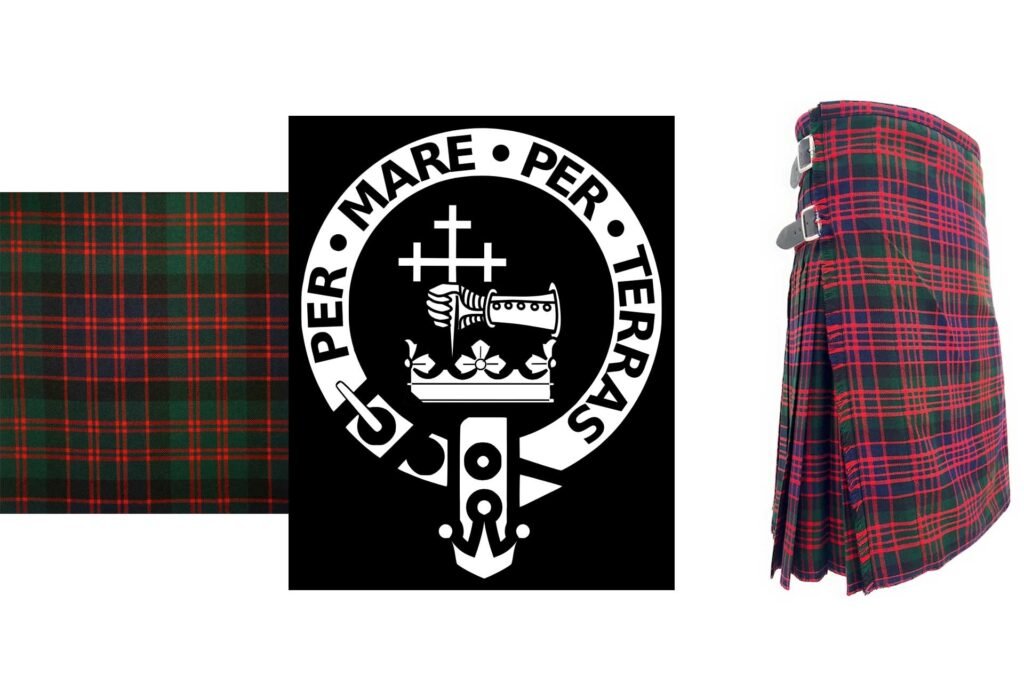
4. MacDonald
MacDonald
History:
Clan MacDonald is one of Scotland’s largest and oldest clans, tracing lineage to the Lords of the Isles.
Why It’s Popular:
The vibrant red and green pattern stands out in ceremonies and Highland gatherings.
Crest Symbolism:
An arm holding a cross crosslet with the motto “Per Mare Per Terras” (“By Sea and By Land”).
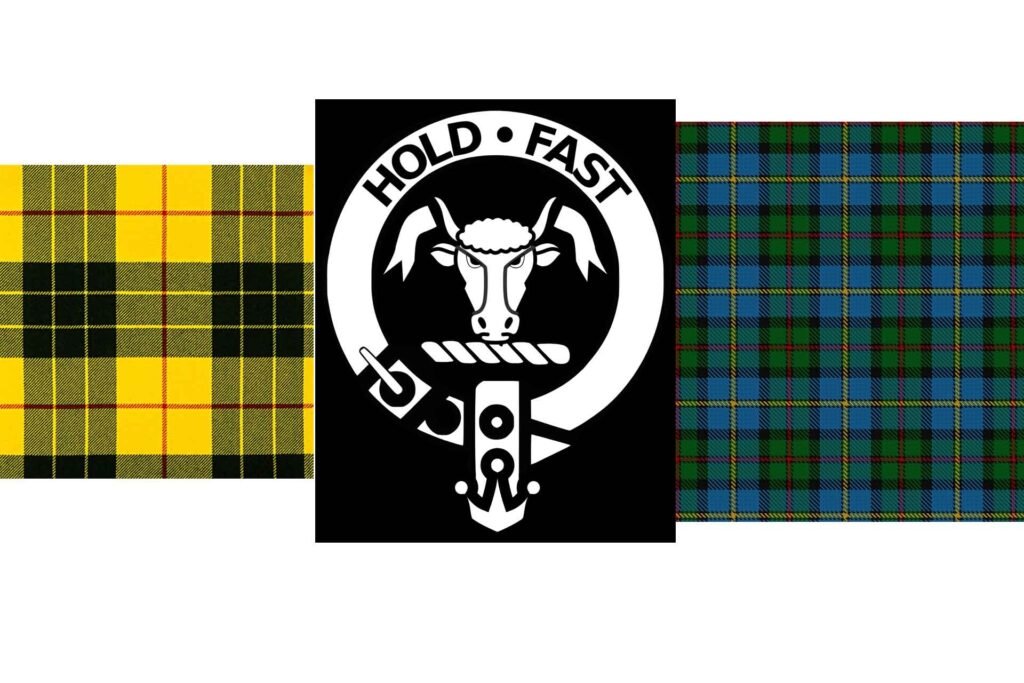
5. MacLeod
MacLeod
History:
Known for their stronghold at Dunvegan Castle on the Isle of Skye.
Why It’s Popular:
The bright yellow and black pattern (MacLeod of Lewis) is unmistakable.
Crest Symbolism:
A bull’s head with the motto “Hold Fast.”
6. Fraser
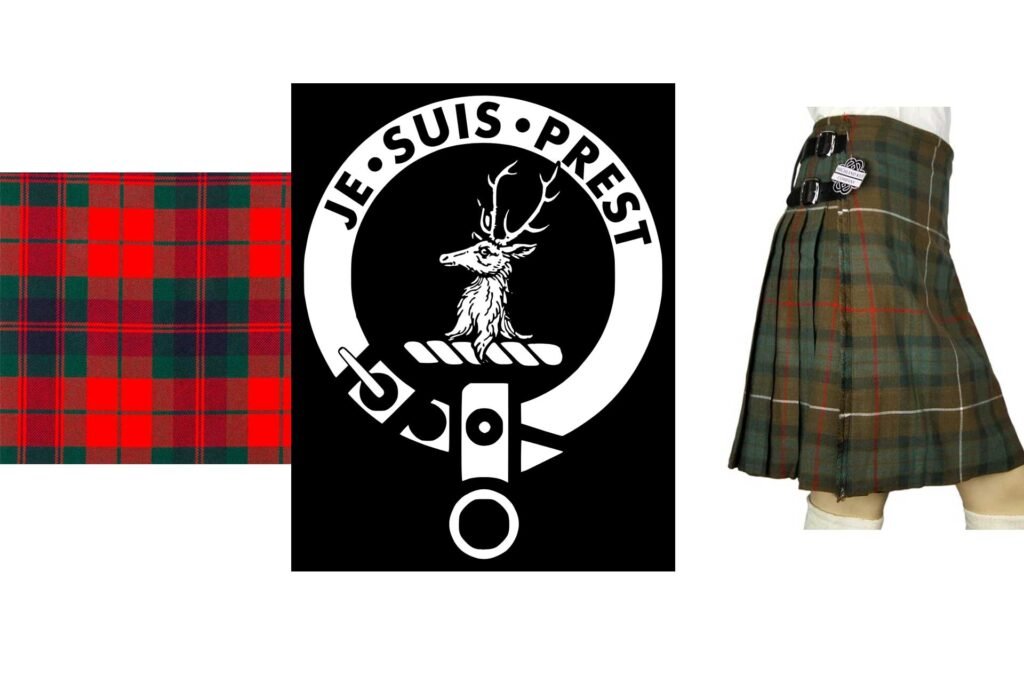
Fraser
History:
Clan Fraser played key roles in Highland conflicts and later emigrated widely.
Why It’s Popular:
The red-based tartan is both bold and traditional.
Crest Symbolism:
A stag’s head with the motto “Je Suis Prest” (“I Am Ready”).
7. Gordon
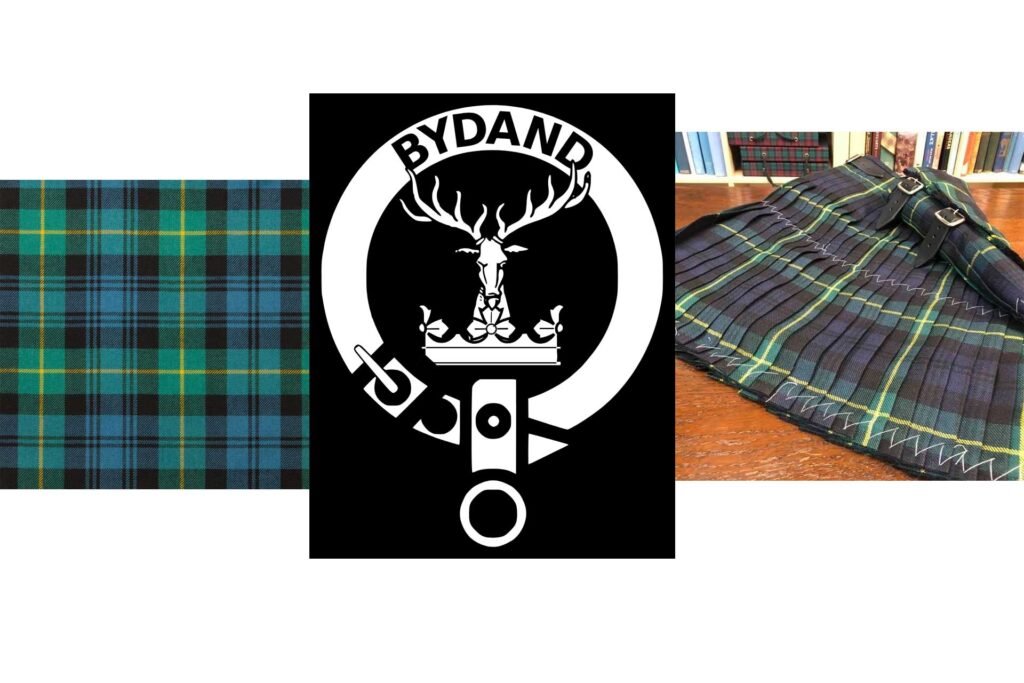
Gordon
History:
A powerful northeastern clan, closely tied to the Gordon Highlanders regiment.
Why It’s Popular:
Deep forest tones give it a refined appearance.
Crest Symbolism:
A stag’s head with the motto “Bydand” (“Steadfast”).
8. MacKenzie
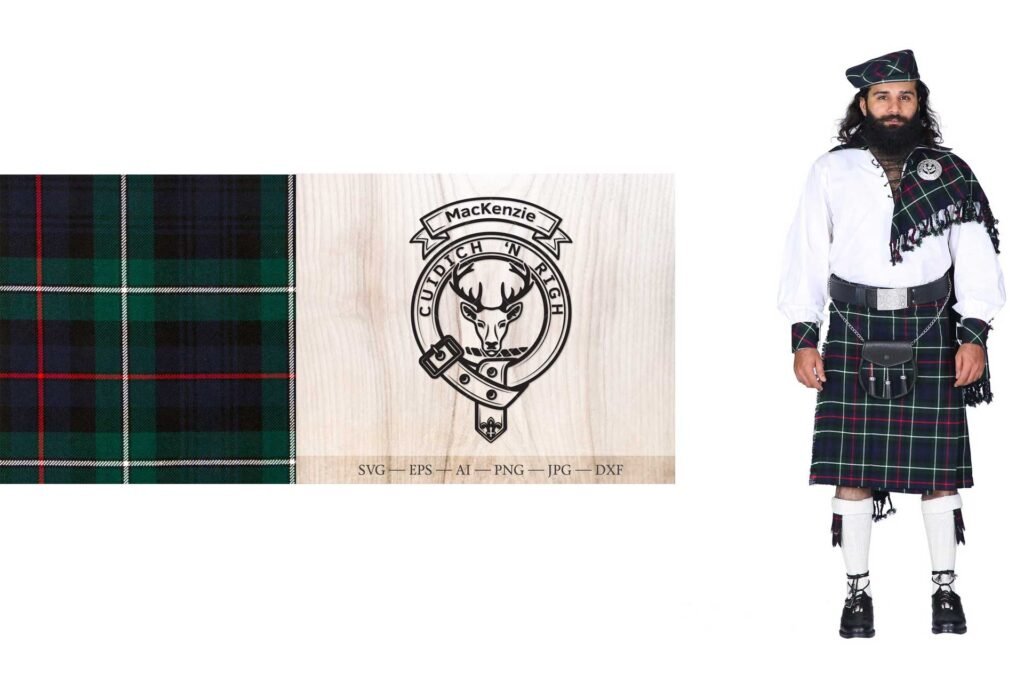
MacKenzie
History:
Clan MacKenzie dominated much of the northern Highlands.
Why It’s Popular:
Its vibrant blue and green tones are eye-catching.
Crest Symbolism:
A mountain in flames with the motto “Luceo Non Uro” (“I Shine, Not Burn”).
9. Buchanan
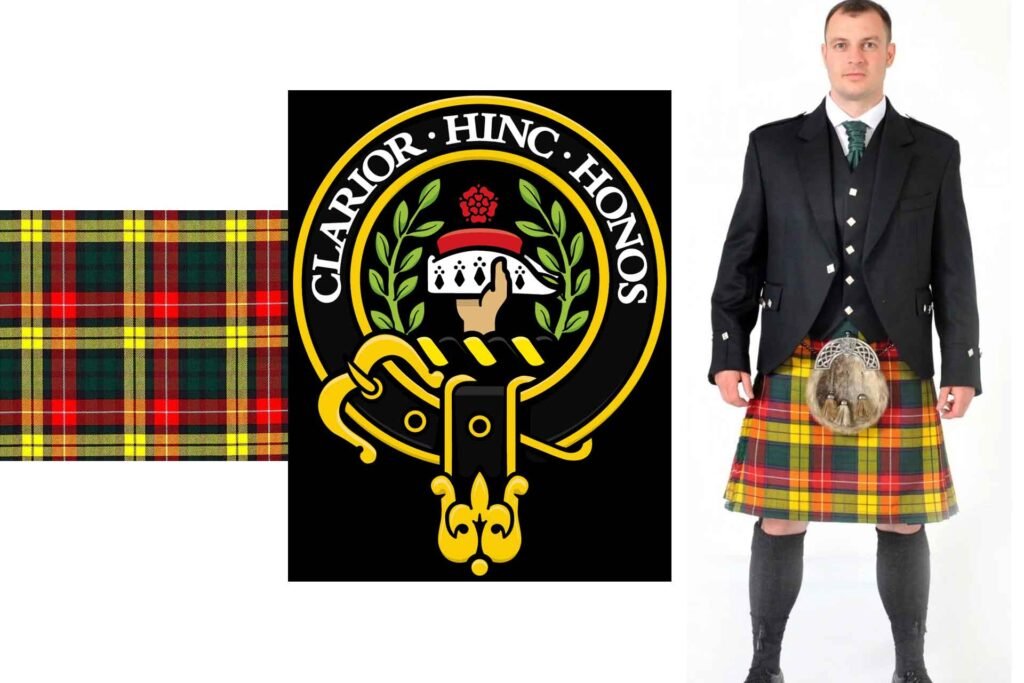
History:
An ancient clan from the Loch Lomond area.
Why It’s Popular:
The vivid red and yellow combination makes it striking and ceremonial.
Crest Symbolism:
A ducal cap with the motto “Clarior Hinc Honos” (“Hence the Brighter Honor”).
10. Douglas

Douglas
History:
One of Scotland’s most powerful medieval families.
Why It’s Popular:
The muted green and blue tones are understated yet elegant.
Crest Symbolism:
A heart (symbolizing Robert the Bruce’s heart) with the motto “Jamais Arrière” (“Never Behind”).
Why Clan Tartans Still Matter Today
Clan tartans continue to be worn at:
-
Weddings
-
Highland Games
-
Cultural festivals
-
Family gatherings
For many, choosing a tartan—especially iconic ones like Black Watch or Royal Stewart—is a deeply personal act tied to ancestry and pride.
These patterns are more than intersecting stripes. They are woven stories of loyalty, resilience, and identity passed down through generations.