
When shopping for clothing fabrics, two common weave types often appear: poplin and twill. While both are widely used in shirts, dresses, and workwear, they have very different structures, textures, and performance characteristics.
If you've ever searched for “twill vs poplin” or wondered “what is twill fabric and how is it different from poplin?”, this guide will break down the key differences so you can choose the right fabric for your clothing.
What Is Poplin Fabric?

what is poplin
Poplin is a plain-weave fabric known for its smooth surface, crisp structure, and lightweight feel. It is usually made from cotton or cotton blends, although polyester and silk versions also exist.
The defining characteristic of poplin is its fine horizontal rib, created by slightly thicker weft yarns running across finer warp threads.
Key Characteristics of Poplin
-
Smooth, crisp texture
-
Lightweight and breathable
-
Subtle horizontal rib pattern
-
Resistant to excessive wrinkling
-
Ideal for warm-weather clothing
Because of these features, poplin is widely used for:
-
Dress shirts
-
Summer dresses
-
Lightweight uniforms
-
Casual pants and skirts
What Is Twill Fabric?
Twill fabric is defined by its diagonal rib pattern, created by a weaving method where the weft thread passes over multiple warp threads before going under one.
This weaving technique produces a fabric that is stronger, thicker, and more durable than plain-weave textiles like poplin.
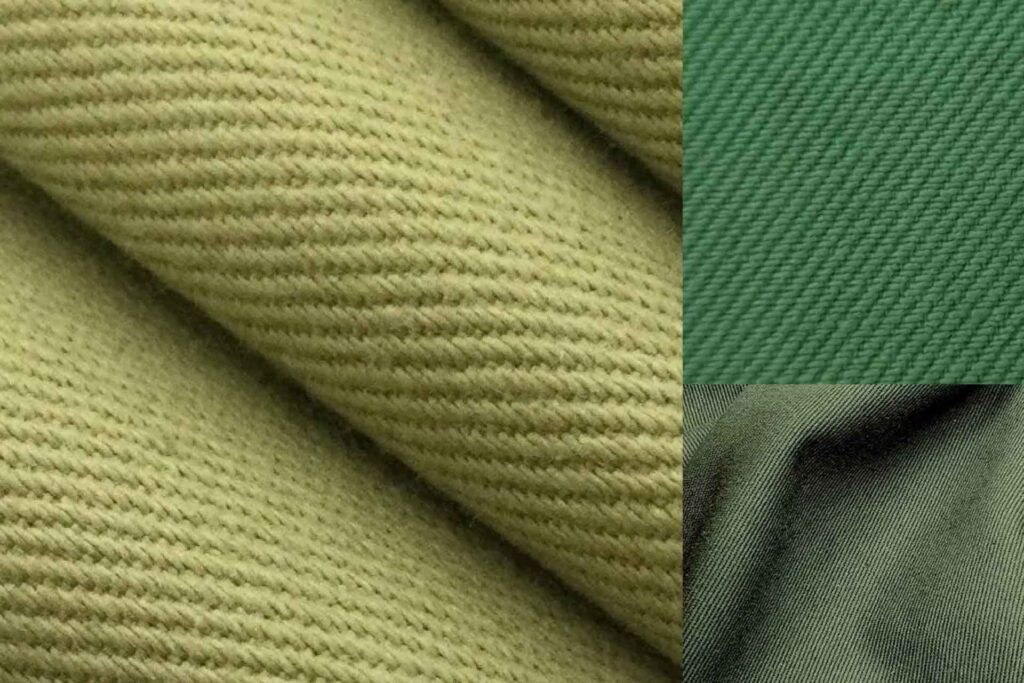
What Is Twill Fabric
Key Characteristics of Twill
-
Distinct diagonal weave pattern
-
Thicker and heavier than poplin
-
Highly durable and resistant to wear
-
Drapes well and wrinkles less
-
Often slightly warmer
Common examples of twill fabrics include:
-
Denim
-
Chino fabric
-
Gabardine
-
Cotton twill workwear
Poplin vs Twill: The Key Differences
When comparing poplin vs twill, the biggest differences lie in weave structure, weight, durability, and appearance.
| Feature | Poplin | Twill |
|---|---|---|
| Weave type | Plain weave | Diagonal twill weave |
| Surface appearance | Smooth with subtle ribs | Visible diagonal lines |
| Weight | Lightweight | Medium to heavy |
| Durability | Moderate | High |
| Breathability | Excellent | Good |
| Wrinkle resistance | Moderate | High |
| Best for | Shirts, dresses | Pants, jackets, workwear |
In simple terms:
-
Poplin is lighter and crisper
-
Twill is stronger and more durable
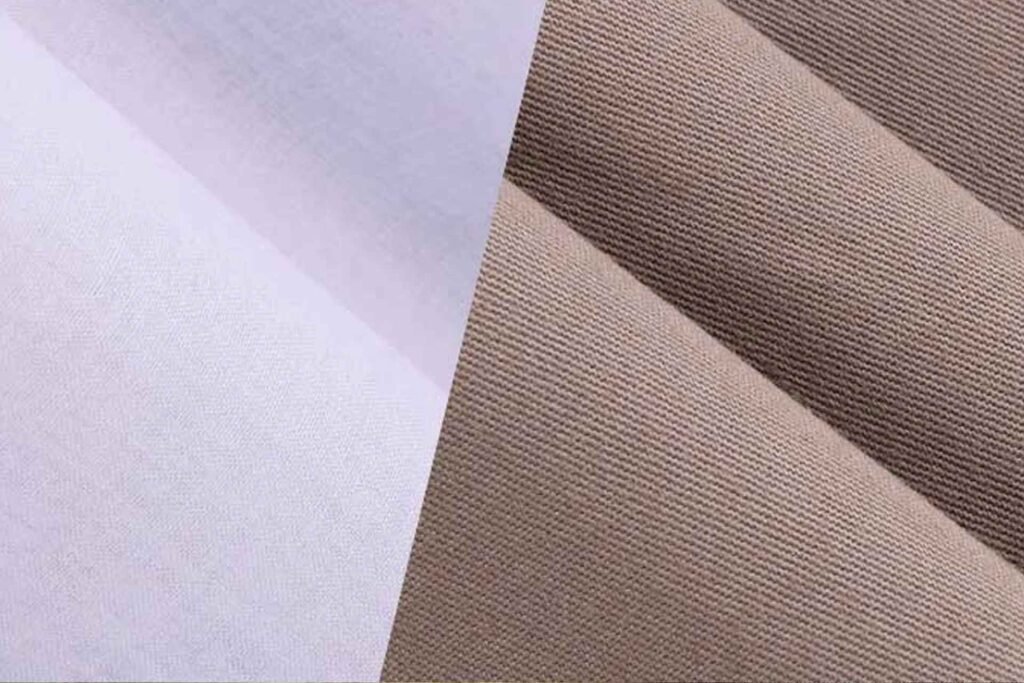
poplin vs twill
Which Fabric Is Better for Shirts?
For dress shirts, poplin is usually the better choice.
Poplin shirts are:
-
Lightweight and breathable
-
Crisp and professional-looking
-
Comfortable in warm climates
However, twill shirts also have advantages. Twill fabrics are slightly thicker and have a softer drape, which can make them feel more luxurious and wrinkle-resistant.
Poplin Shirt Advantages
-
Cooler in hot weather
-
Clean, sharp appearance
-
Lightweight comfort
Twill Shirt Advantages
-
Softer hand feel
-
More wrinkle-resistant
-
Slightly more durable
Poplin vs Twill for Pants and Workwear
When it comes to pants or heavy-duty garments, twill usually wins.
The diagonal weave of twill distributes stress across the fabric, making it ideal for:
-
Work pants
-
Chinos
-
Jackets
-
Denim jeans
Poplin, being lighter, is better suited for summer garments rather than heavy-duty clothing.
Which Fabric Is More Durable?
If durability is the priority, twill fabric is stronger than poplin.
The twill weave structure:
-
Reduces fabric stress
-
Improves resistance to tearing
-
Handles repeated washing better
This is why many uniforms and work garments are made from cotton twill instead of poplin.
Which Fabric Is Better for Hot Weather?
For hot weather clothing, poplin is typically the better option.
Because poplin is:
-
Lightweight
-
Breathable
-
Smooth against the skin
it performs better in summer shirts, dresses, and lightweight tops.
Twill fabrics are slightly thicker and therefore retain more warmth.
Poplin Twill Blends: Do They Exist?
You may sometimes see the term “poplin twill” in fabric descriptions. In most cases, this simply refers to fabric collections that include both poplin and twill weaves, rather than a true hybrid weave.
Since poplin uses a plain weave and twill uses a diagonal weave, they are fundamentally different structures and usually not combined in a single weave pattern.
How to Choose Between Poplin and Twill
The best choice depends on how you plan to use the fabric.
Choose poplin if you want:
-
Lightweight shirts
-
Summer clothing
-
A crisp, polished look
-
Breathable fabric for warm climates
Choose twill if you want:
-
Durable pants or jackets
-
Heavy-duty garments
-
A softer drape
-
Wrinkle resistance
Final Thoughts
The debate between twill vs poplin isn't about which fabric is universally better—it’s about choosing the right weave for the right purpose.
-
Poplin excels in lightweight, breathable clothing like shirts and dresses.
-
Twill shines in durable garments such as pants, jackets, and workwear.
By understanding the structure of these two fabrics, you can make smarter decisions when selecting clothing or purchasing fabric for sewing projects.
FAQ
What is twill fabric?
Twill is a textile weave characterized by diagonal parallel ribs, created when the weft thread passes over multiple warp threads before going under one.
Is twill stronger than poplin?
Yes. Twill fabrics are generally more durable and resistant to wear than poplin because of their diagonal weave structure.
Is poplin better for shirts?
Poplin is often preferred for lightweight dress shirts, especially in warm weather, because it is breathable and crisp.
Does twill wrinkle less than poplin?
Yes. Twill fabrics usually resist wrinkles better due to their flexible weave structure.