
Chiffon is a favorite among designers for its airiness and grace, but its delicate nature requires specialized knowledge to handle correctly. From the sewing machine to the wardrobe, working with a chiffon fabric dress or intricate chiffon ribbon demands precision.
Whether you are working with high-end printed silk chiffon or durable synthetics, following professional best practices ensures your designs maintain their integrity and beauty over time.
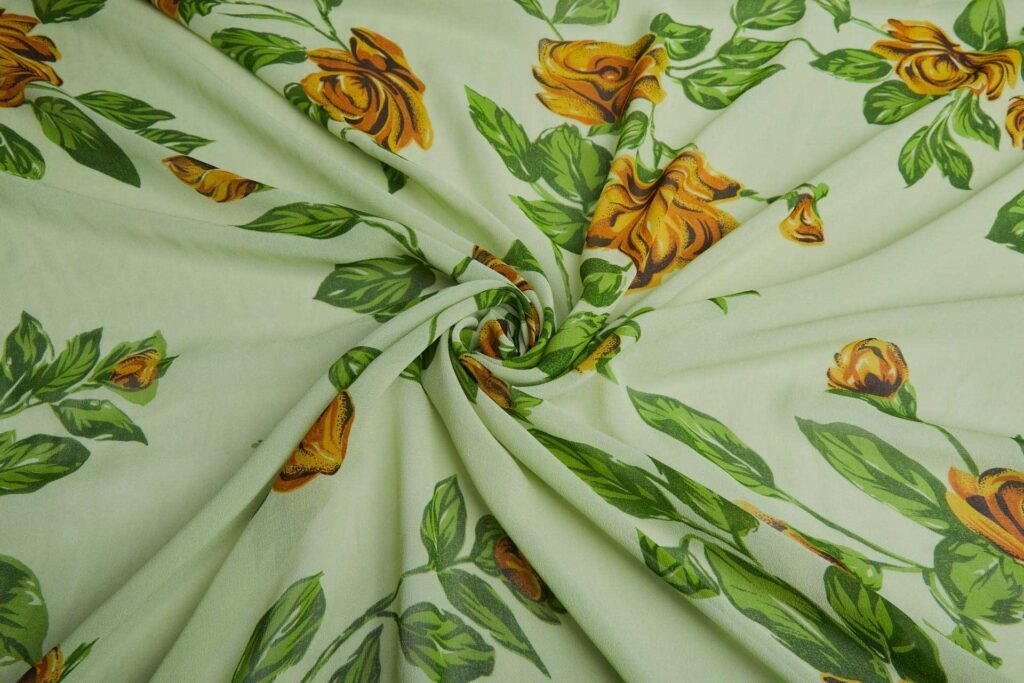
printed silk chiffon
1. Expert Sewing Tips: Taming the Sheer
Working with a chiffon material dress can be challenging because the fabric is notoriously slippery and prone to fraying. To achieve a professional finish on sheer chiffon, consider these technical approaches:
-
Stabilize Before Cutting: Use tissue paper underneath the fabric while cutting to prevent it from sliding.
-
Needle and Thread Selection: Always use a new, fine 'Sharps' or 'Microtex' needle (size 60/8 or 70/10) to avoid snags and puckering.
-
Mastering the French Seam: Because chiffon is transparent, standard overlocked edges look messy. The French Seam is the industry standard—it encases the raw edges within the seam itself, providing a clean, invisible look from the outside.
-
Handling Fraying: For embroidered chiffon fabric, where the weight of the thread can pull on the base weave, consider using a rolled hem or a narrow zigzag stitch to secure the edges immediately.
2. Creative Applications: Ribbons and Embellishments
Chiffon isn't just for gowns; its texture makes it an exceptional material for detailing.
-
The Chiffon Ribbon: Soft, frayed-edge chiffon ribbons are a massive trend in bridal bouquets, luxury gift packaging, and stationery. Their organic, hand-dyed appearance adds a tactile layer that satin ribbons cannot achieve.
-
Embroidered Accents: Using embroidered chiffon fabric for sleeves or back panels adds a tattoo-like effect on the skin, combining the sheerness of the base with the three-dimensional texture of the threadwork.
-
Printed Silk Chiffon: For luxury accessories, printed silk chiffon is often used for high-end scarves and hair wraps, offering a vibrant pop of color with a weightless feel.
3. Care and Longevity: Silk vs Synthetic
The longevity of a chiffon fabric dress depends entirely on its fiber content. Proper maintenance is the key to preventing the fabric from becoming dull or brittle.
| Maintenance Task | Natural Silk Chiffon | Polyester/Synthetic Chiffon |
| Washing | Professional Dry Clean Only to preserve the natural oils and luster. | Hand wash or delicate machine wash in a mesh bag with cool water. |
| Drying | Never wring; lay flat on a towel away from direct sunlight. | Tumble dry on 'Air Fluff' or hang to dry; dries very quickly. |
| Ironing | Use the lowest silk setting with a pressing cloth; steam with caution. | Use a cool iron; polyester can melt easily under high heat. |
| Storage | Store flat in acid-free tissue paper to avoid 'hanger stretch.' | Can be hung on padded hangers, but avoid sharp clips. |
Summary for Designers
Mastering chiffon is about respecting its delicacy while leveraging its strengths. By choosing the right seam finishes for a chiffon fabric dress and understanding the care requirements of your specific fiber, you can create garments that are as durable as they are beautiful. Quality design starts with a deep understanding of the medium—once you control the fabric, the fabric will elevate your design.