
Taffeta has long been associated with luxury, structure, and visual drama. Designers value it not only for its crisp hand feel but also for the unique visual effects that can be created through weaving, dyeing, and embellishment techniques. From shimmering iridescent taffeta to the distinctive ripple pattern of moiré taffeta, this fabric offers endless possibilities for creative design.
Today, taffeta is widely used in couture gowns, eveningwear, stage costumes, decorative interiors, and statement fashion pieces. In this guide, we explore some of the most visually striking forms of taffeta and how designers use them to create memorable garments and textiles.
Iridescent Taffeta: The Color-Shifting Fabric
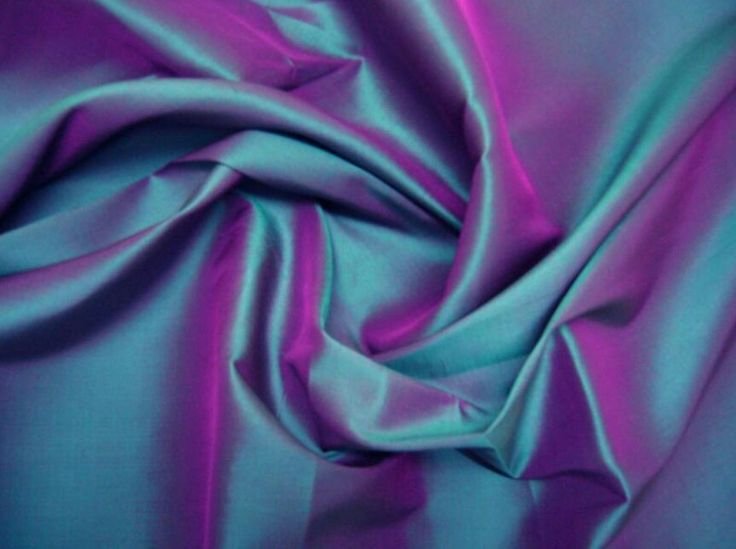
iridescent taffeta
One of the most captivating variations is iridescent taffeta, sometimes called shot silk taffeta. This fabric is woven using two different colored threads—one in the warp and another in the weft. As light hits the surface from different angles, the colors appear to shift and change.
Key characteristics
-
Dramatic color-changing effect
-
Rich visual depth
-
Elegant sheen without excessive shine
-
Lightweight but structured drape
Popular uses
-
Evening gowns
-
Prom and formal dresses
-
Couture skirts
-
Decorative fashion accents
Because of its striking appearance, iridescent or two tone taffeta is often chosen when designers want garments to stand out under lighting or movement.
Moiré Taffeta: The Signature Water Ripple Pattern
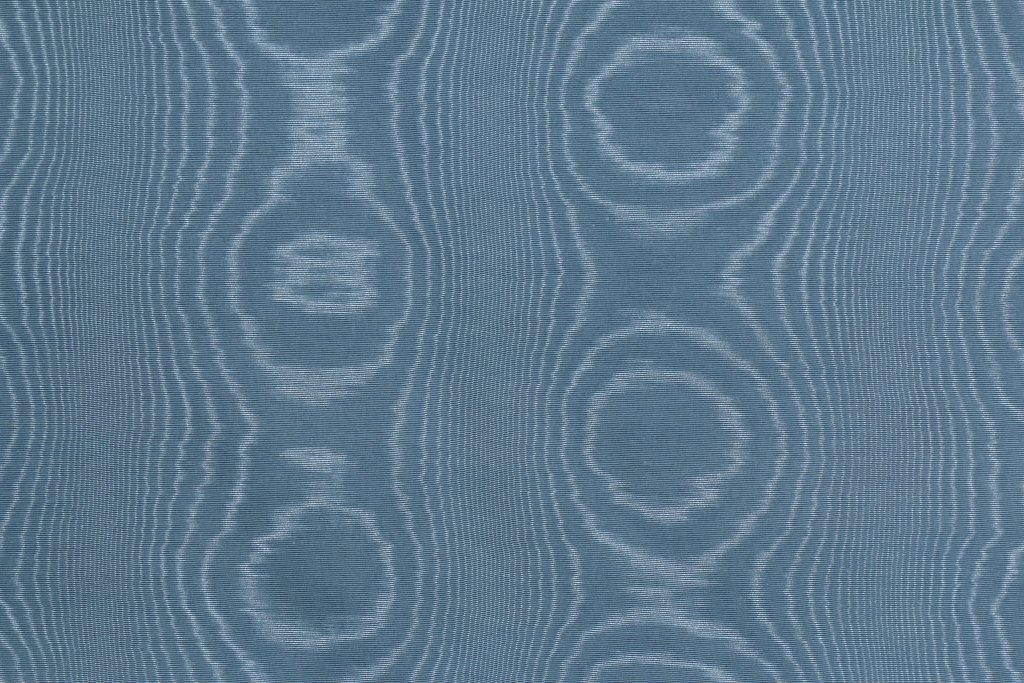
Moiré taffeta
Moiré taffeta is instantly recognizable for its water-like ripple pattern, sometimes described as a “watered silk” effect. The pattern is created through a special finishing process in which fabric is pressed between engraved rollers, producing a subtle optical texture.
What makes moiré unique?
-
Distinctive wave pattern
-
Elegant, classic aesthetic
-
Subtle texture without embroidery
-
Strong association with formalwear
Common applications
-
Opera coats
-
Luxury gowns
-
Historical costumes
-
Interior textiles
Moiré fabrics have been used in European court fashion since the 17th century, making them one of the most historically prestigious forms of decorative textile.
Plaid Silk Taffeta: Structure Meets Pattern
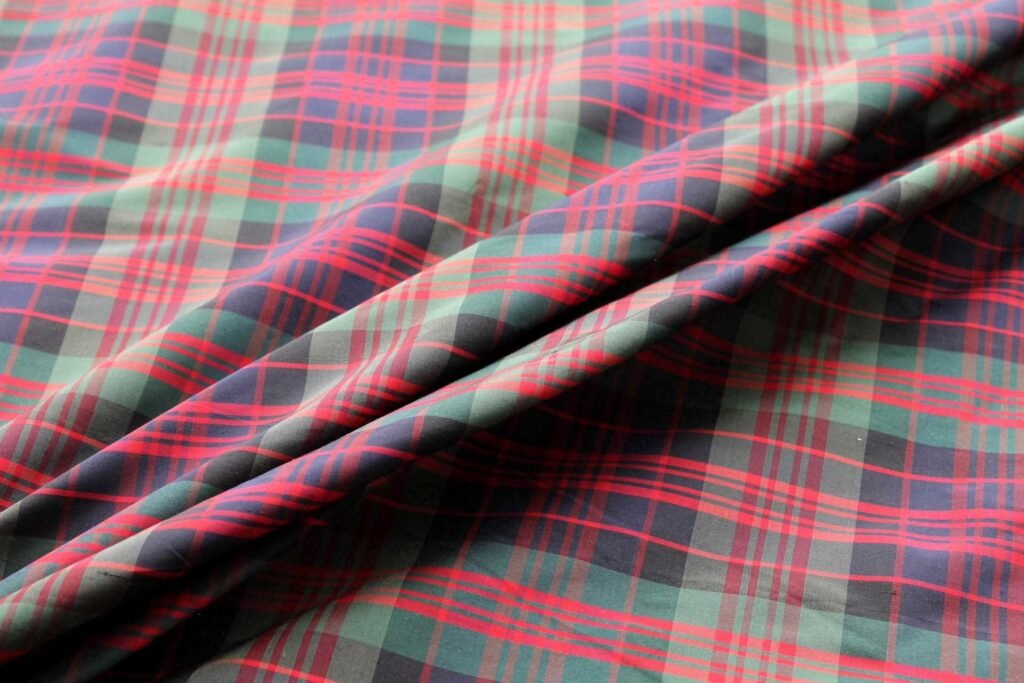
plaid silk taffeta
While many people associate plaid patterns with wool fabrics, plaid silk taffeta offers a more structured and refined interpretation of the design.
Advantages of plaid taffeta
-
Crisp fabric structure
-
Clear, sharp pattern definition
-
Elegant drape suitable for tailored garments
Typical design uses
-
Formal skirts
-
Structured dresses
-
Fashion jackets
-
Designer couture collections
Because taffeta holds its shape well, plaid patterns remain visually sharp and symmetrical, making the fabric ideal for architectural silhouettes in fashion design.
Embroidered Taffeta: Texture and Luxury Combined
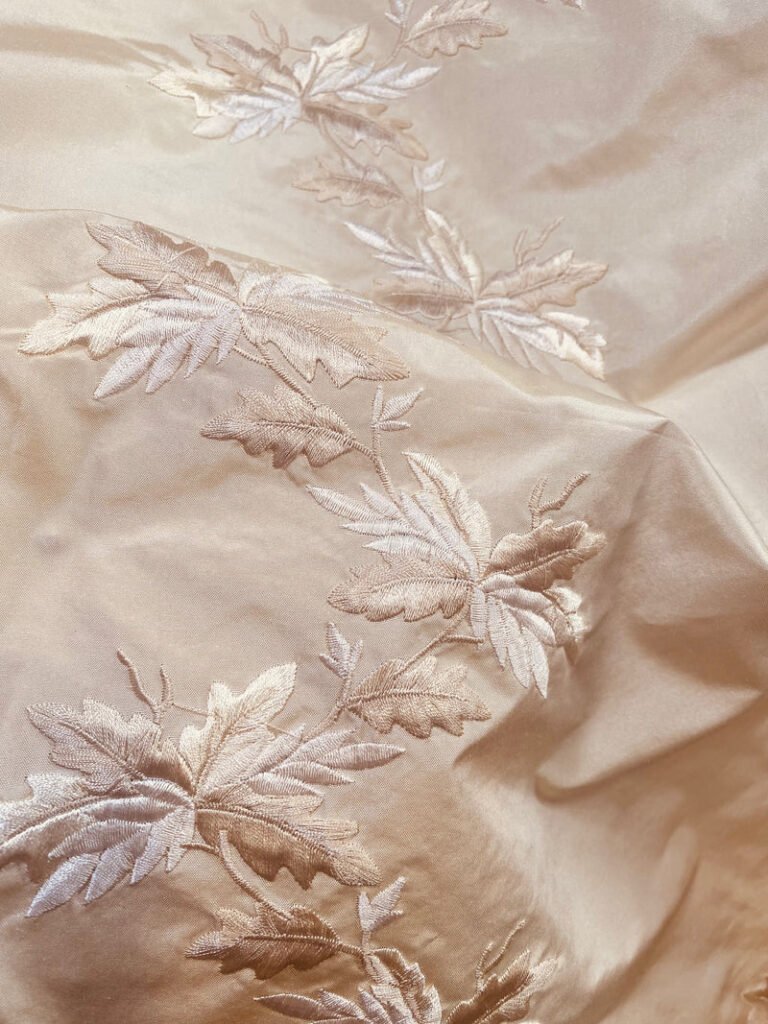
embroidered taffeta
For high-end fashion and decorative textiles, embroidered taffeta combines the crisp base fabric with detailed surface embellishment.
Why designers love embroidered taffeta
-
Strong base fabric supports heavy embroidery
-
Maintains garment structure
-
Adds dimension and visual richness
Where it’s commonly used
-
Wedding gowns
-
Evening wear
-
Traditional ceremonial garments
-
Luxury home decor
The firmness of taffeta helps embroidery designs remain defined and structured, even when using elaborate patterns or metallic threads.
Two-Tone Taffeta: Subtle Elegance
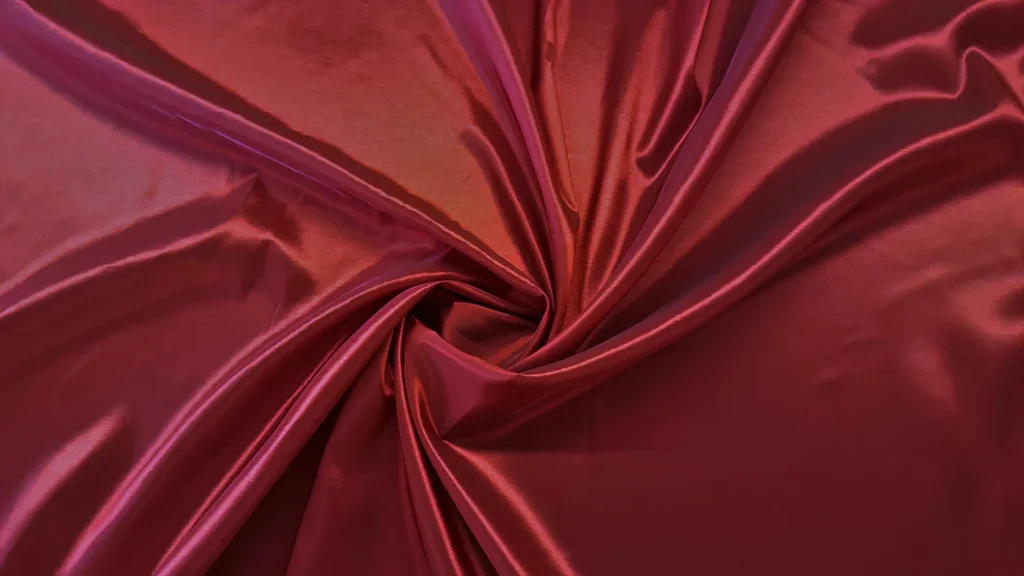
Two tone taffeta
Two tone taffeta is closely related to iridescent fabrics but tends to produce a more subtle color contrast rather than a dramatic shift.
The effect is created through:
-
Different warp and weft colors
-
Fine silk or synthetic fibers
-
Tight plain weave construction
Benefits
-
Elegant depth of color
-
Dynamic appearance under light
-
Sophisticated alternative to solid fabrics
Designers often choose two tone taffeta for garments where they want visual complexity without bold patterns.
Why Designers Continue to Choose Taffeta
Taffeta remains a favorite in both fashion and decorative design because it offers a rare combination of:
-
Structural stiffness
-
Elegant sheen
-
Lightweight durability
-
Compatibility with decorative techniques
From moiré finishing and iridescent weaving to embroidery and plaid patterns, the fabric provides designers with a wide palette of creative possibilities.
Whether used in couture gowns, stage costumes, luxury interiors, or artistic textiles, taffeta continues to evolve while maintaining its reputation as one of the most visually expressive fabrics in fashion history.