
When starting a new knitting or textile project, the first challenge is often the choice of material: should you use cotton yarn or wool yarn for knitting?
While both are natural fibers, they have fundamental differences in physical characteristics, wearability, and maintenance. Choosing the right 'yarn' not only determines the texture of the finished product but also its practicality.
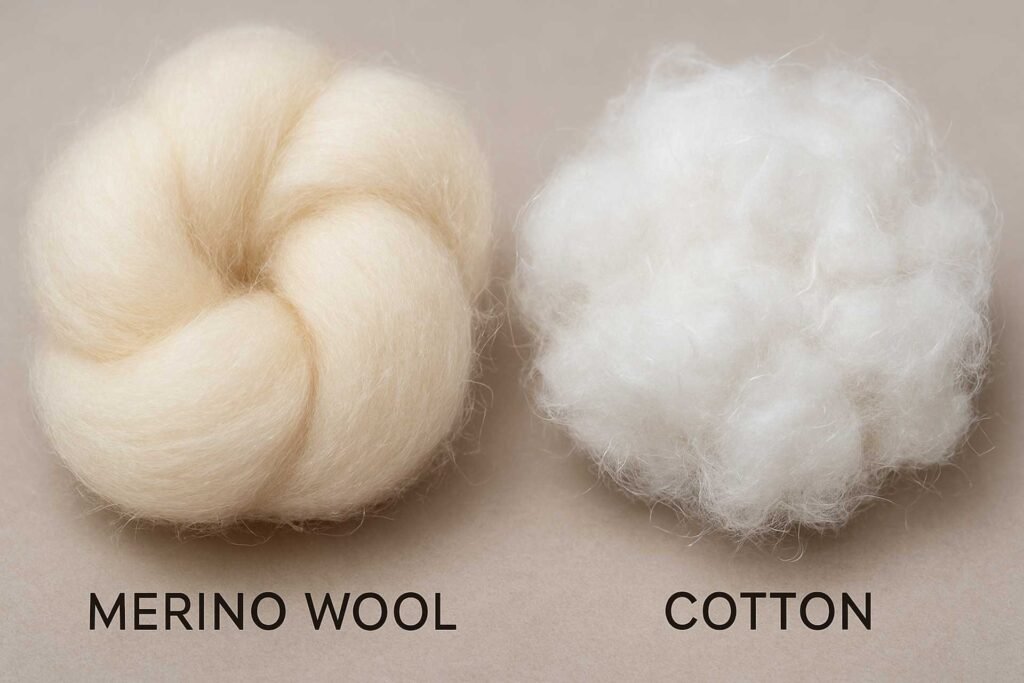
cotton yarn vs wool yarn
1. In-Depth Comparison of Physical Properties
Cotton Yarn: The Synonym for Coolness and Drape
Cotton yarn is derived from the cotton plant and is a non-elastic fiber.
-
Cool and Breathable: Cotton fibers have excellent moisture absorption and heat conductivity, quickly dissipating body heat.
-
Lack of Elasticity: Cotton has no 'bounce-back.' This means that if knitted too loosely, the finished product tends to stretch and lose shape with washing and wear.
-
Easy Maintenance: Most cotton products are machine washable and dryable, making them very durable for daily use.
Wool Yarn: The Embodiment of Warmth and Loft
Whether it is wool threads for knitting or chunky woolen yarn, they possess a natural protein structure.
-
Superior Insulation: The natural crimp of wool fibers traps air, providing an excellent thermal barrier.
-
Natural Elasticity: Wool has 'memory'; it returns to its original shape even after being stretched, making garments more structured.
-
Voluminous Texture: Wool yarns are typically lighter and fluffier than cotton, creating high-impact visual textures.
2. Scenario-Based Recommendations: When to Choose Which?
-
Summer Apparel & Baby Items: Cotton yarn is highly recommended. Its skin-friendly nature and moisture-wicking properties are perfect for summer T-shirts, tanks, and baby blankets that require frequent washing.
-
Winter Outerwear & Accessories: Wool yarn for knitting is the undisputed choice. Hats, scarves, and thick sweaters need the thermoregulating performance that only wool provides.
-
Home Decor: For sturdy crocheted baskets or placemats, cotton is better; for soft, high-end cushion covers, wool yarns offer a more luxurious feel.
3. Advanced Advice for DIY Brands and Small Studios
If you are running a small original design brand or studio, relying solely on manual knitting with individual yarns often leads to two major pain points: low production efficiency and inconsistent texture.
Why Consider Knitted Fabrics by the Roll?
At TextileCloth.com, we supply high-quality Cotton & Wool Knitted Fabrics to many designers who started in DIY.
-
Production Efficiency: Buying knitted fabric by the roll for cutting and sewing is significantly faster than knitting from scratch, helping you scale for commercial production.
-
Consistency: Industrial-grade weaving ensures that the weight, density, and texture are perfectly uniform across the entire roll, avoiding flaws caused by varying manual tension.
-
Professional Texture: Our knit collections range from lightweight cotton jerseys to heavy wool ribs. They retain the natural beauty of yarns wool while solving the deformation issues of natural fibers through pre-shrinking treatments.
Instead of spending all your energy on endless knitting, focus your efforts on silhouette design. Choose our professional knitted fabrics to give your work the exquisite finish of a major fashion label while retaining that sought-after natural feel.