Introduction: Navigating the 2026 Supply Chain
As we move through 2026, the global spandex market continues to evolve under the pressure of fluctuating raw material costs and a massive shift toward sustainable production. For B2B buyers, understanding the 'why' behind spandex price movements is just as critical as knowing 'who' the top spandex suppliers are. Whether you are sourcing raw yarn or finished spandex cloth, staying ahead of market trends is the only way to protect your margins. This report breaks down the current pricing structures and the dominant manufacturers shaping the industry today.
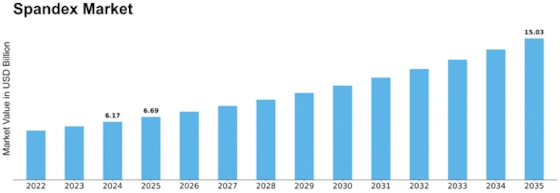
spandex price
1. Understanding Spandex Price Drivers in 2026
The price of spandex is rarely stable, as it is heavily tethered to the petrochemical industry. If you are tracking spandex cloth price fluctuations, you must watch these three variables:
-
Raw Material Costs (PTMEG & MDI): These two chemicals make up over 80% of spandex production costs. Any volatility in global crude oil or natural gas prices directly impacts the factory gate price of spandex yarn.
-
Energy and Sustainability Levies: With the 2026 focus on 'Green Manufacturing,' many suppliers have integrated carbon taxes into their pricing. Recycled spandex now carries a premium, but it is becoming a requirement for European and North American retail contracts.
-
Capacity Expansion vs. Demand: Massive capacity jumps in mainland China have stabilized prices recently, preventing the sharp spikes seen in previous years, despite high demand in the athleisure sector.
2. The Titans of Production: Top Global Suppliers
When sourcing at scale, reliability and consistency are paramount. The market is currently dominated by a few 'Giga-factories' that set the global standard for quality.
Huafon Spandex (Qianxi Brand)
As one of the world's largest producers, Huafon Spandex—often recognized by its Qianxi brand—is the go-to for high-volume, cost-effective yarn.
-
Specialty: High-speed spinning and excellent uniformity.
-
B2B Advantage: Huge economies of scale often lead to the most competitive spandex price for standard 20D, 40D, and 70D specifications.
Hyosung TNC (creora®)
A South Korean powerhouse, Hyosung remains the global leader in market share.
-
Specialty: Innovation in functional spandex (heat-resistant, chlorine-resistant, and high-stretch).
-
B2B Advantage: Global distribution network. If you are manufacturing in multiple countries (e.g., Vietnam, Turkey, Brazil), Hyosung offers seamless local supply.
The Lycra Company
The original pioneer of elastane, focusing now on the high-end, branded consumer market.
-
Specialty: Brand recognition and technical support.
-
B2B Advantage: Using 'Lycra' branded fibers allows garment manufacturers to command higher retail prices through co-branding.
3. Spandex Specifications and Price Variance
Prices vary significantly based on the 'Denier' (thickness) and the functional properties required.
| Specification | Common Use | Relative Price Trend (2026) |
| 20D - 30D | Sheer hosiery, ultra-light knits | Stable; high supply |
| 40D | Standard Denim, T-shirts | Most Volatile (Highest volume) |
| 70D - 140D | Swimwear, Medical compression | Premium pricing due to specialized tech |
| Recycled Spandex | Eco-friendly activewear | 15-20% higher than virgin spandex |
4. Sourcing Strategy: How to Evaluate Spandex Suppliers
For B2B buyers, price is only one part of the equation. When vetting spandex suppliers, prioritize these technical benchmarks:
-
Breaking Tenacity: How much force can the yarn take before snapping? Crucial for high-speed knitting machines to prevent downtime.
-
Heat Resistance: If your fabric undergoes high-temperature dyeing or heat-setting, you need a supplier whose yarn won't lose elasticity during the process.
-
Oil Content: Lower oil content usually means better bonding during the dyeing process, reducing 'yellowing' issues.
5. Conclusion: Looking Ahead
The spandex market in 2026 is characterized by a 'flight to quality.' While price remains a major factor, the shift toward sustainable and functional fibers is creating a bifurcated market. High-volume buyers should look to Huafon (Qianxi) for cost-efficiency, while those in the performance sports or luxury sectors should lean toward Hyosung or Lycra.